I make the screens, games and stories inside museums and brand homes.
Creative technologist in Los Angeles. Wiggle your mouse, every picture is a real install.
Things I've made
-
- What's this?
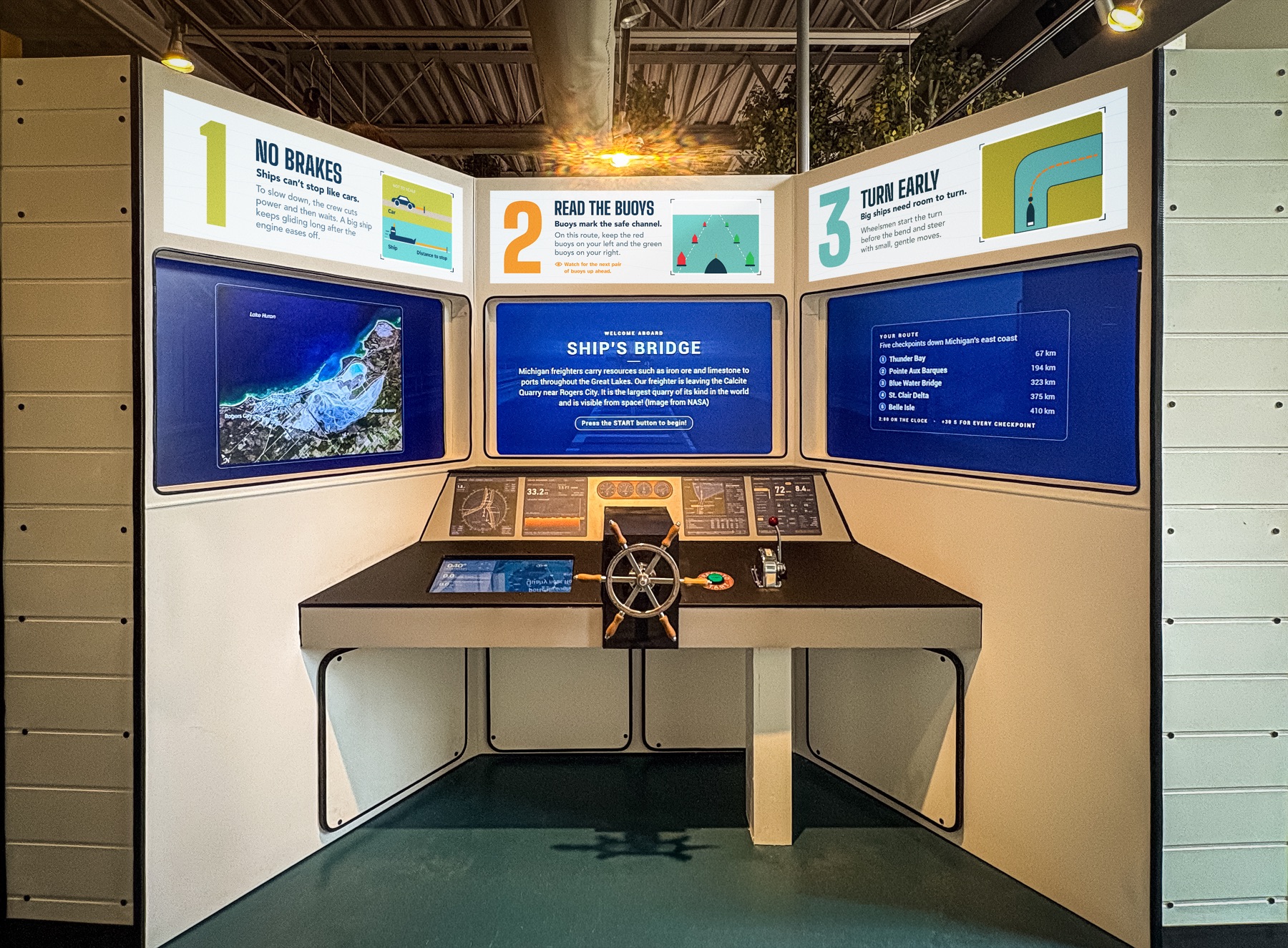
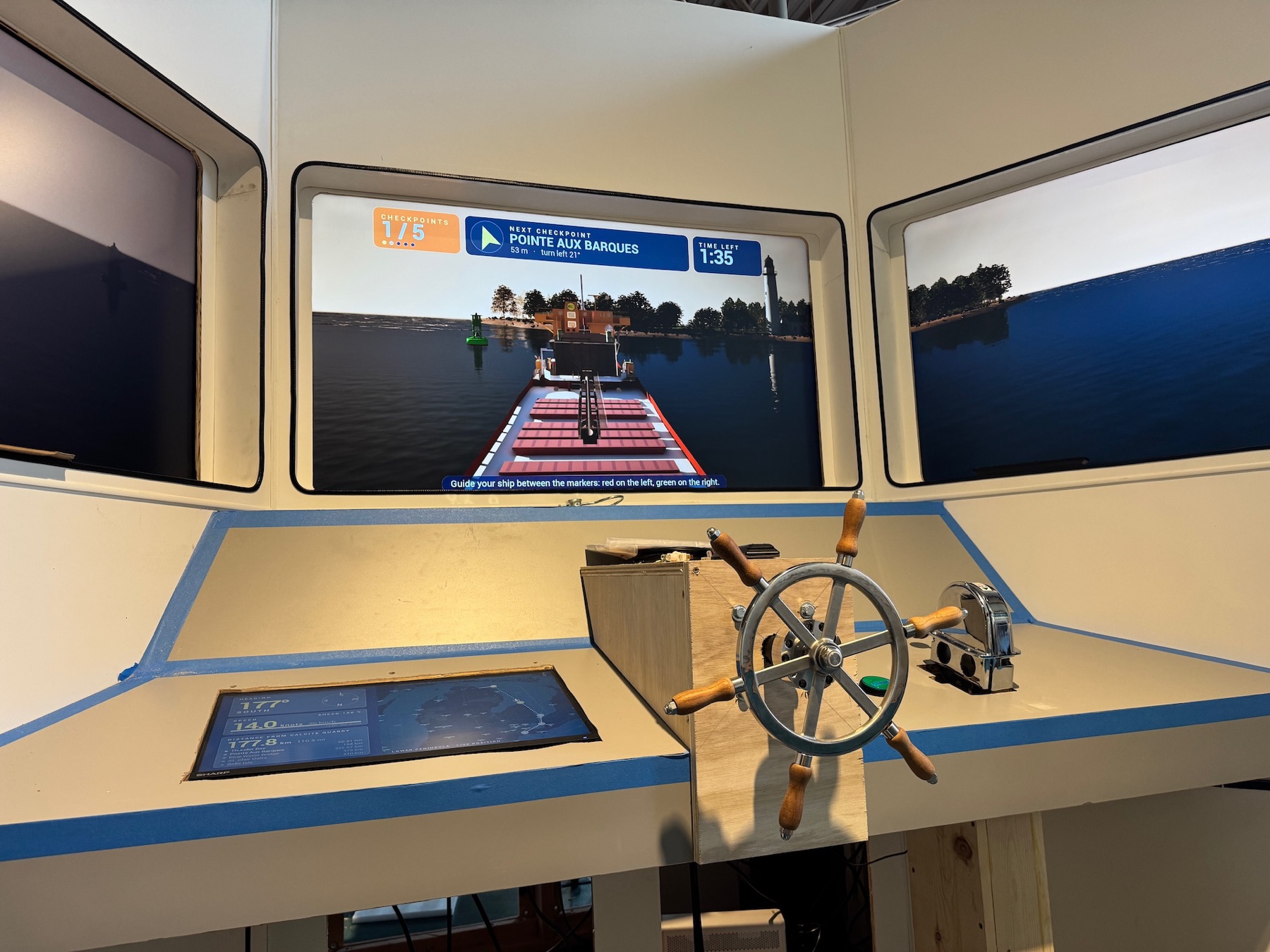
- A ship's bridge you can actually drive. You take the wheel and the throttle and steer past real Great Lakes landmarks, with three screens as the windows. It's at the Outdoor Adventure Center in Detroit.
- What did I do?
- I scoped it and directed the build, from the sensors in the wheel and throttle to how the boat should feel on the water.
- Why three screens?
- The side screens angle in like a real bridge. nDisplay draws the right view for each one, so the horizon lines up instead of one picture getting stretched across all three.
- Kid-proof?
- A kid will slam the throttle. The sensor input is smoothed inside the engine, so even that reads as a real command.
- Made with
- Unreal Engine, nDisplay, custom wheel and throttle sensors. Installed 2026.
-
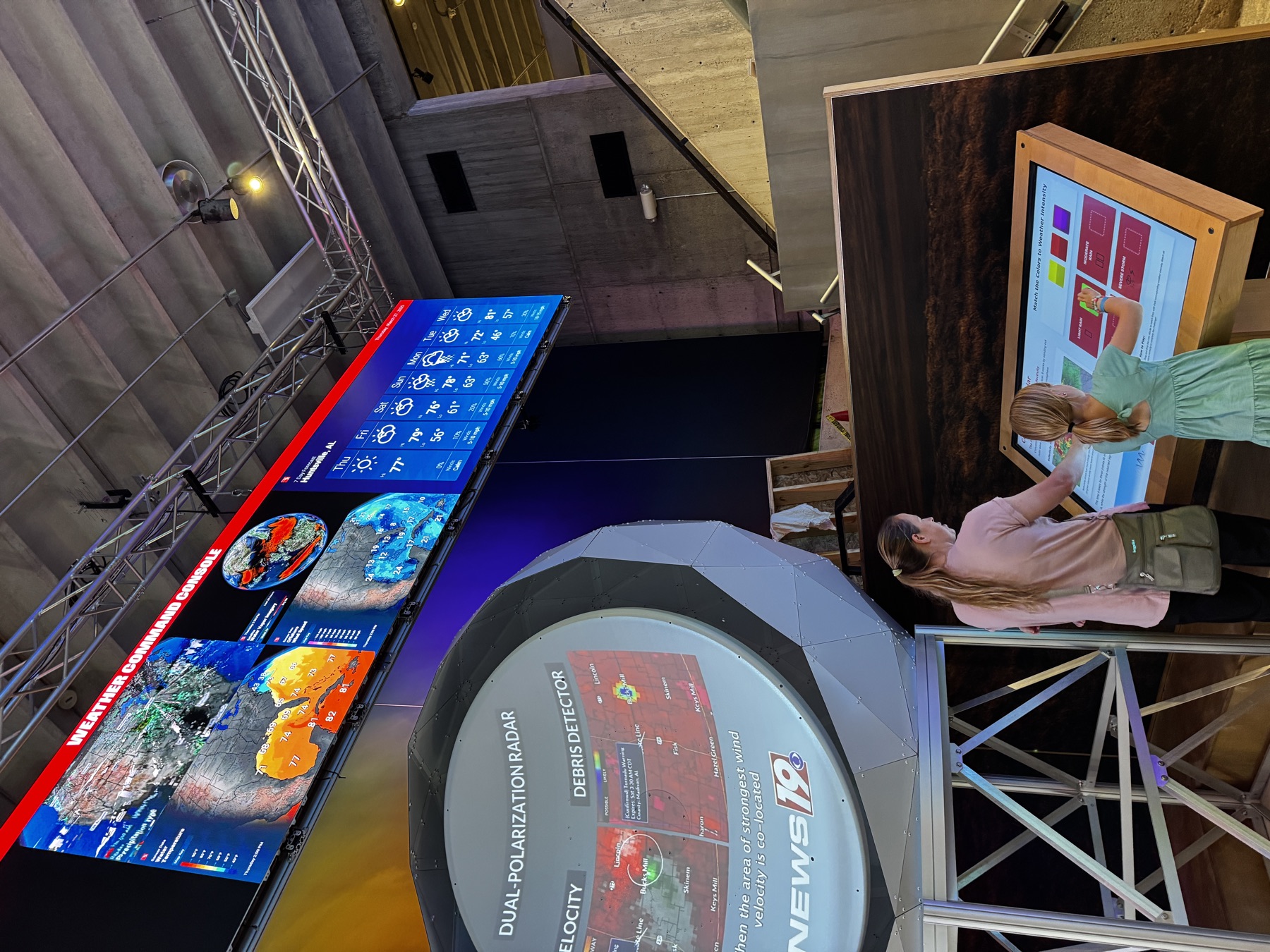
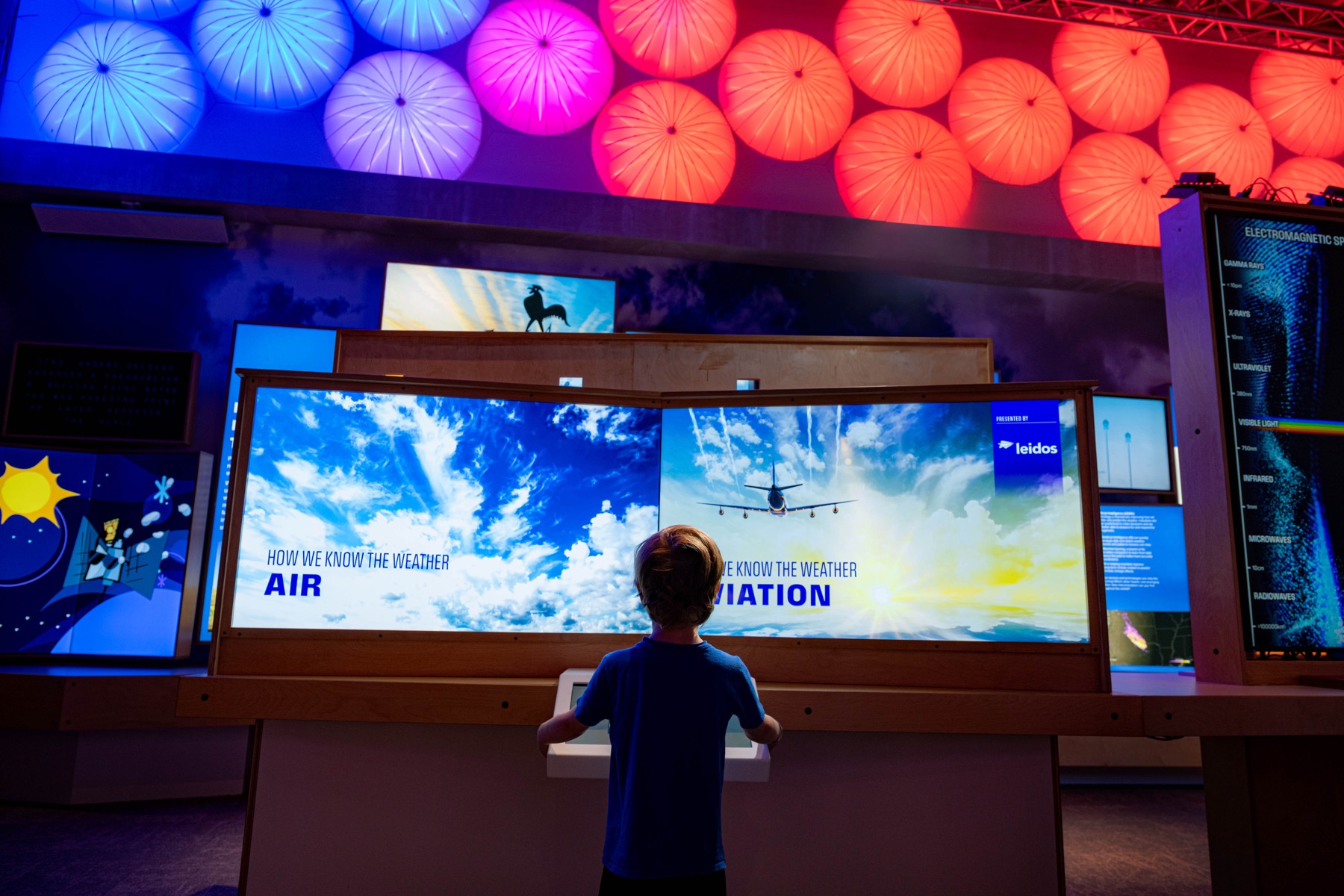
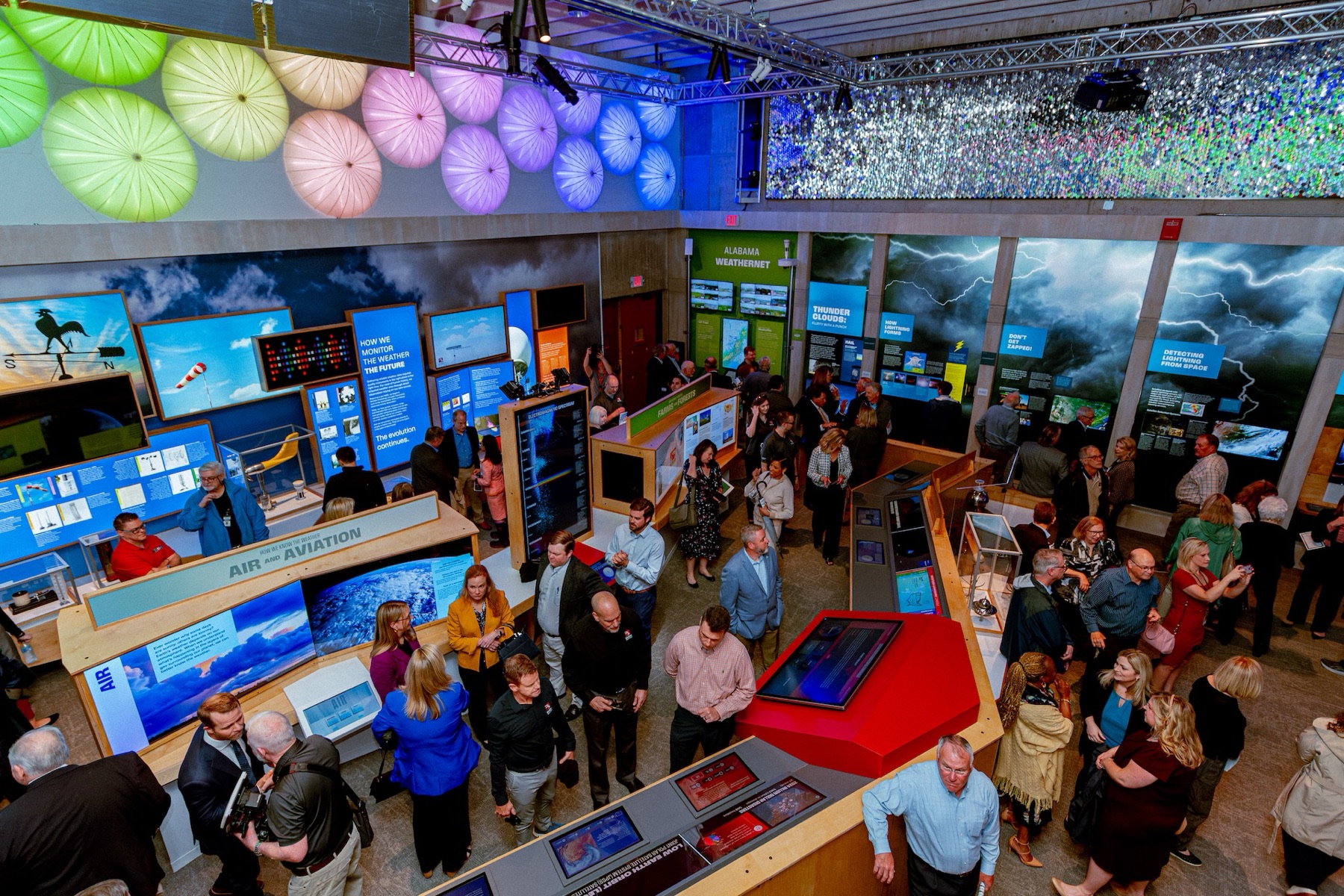
- What's this?
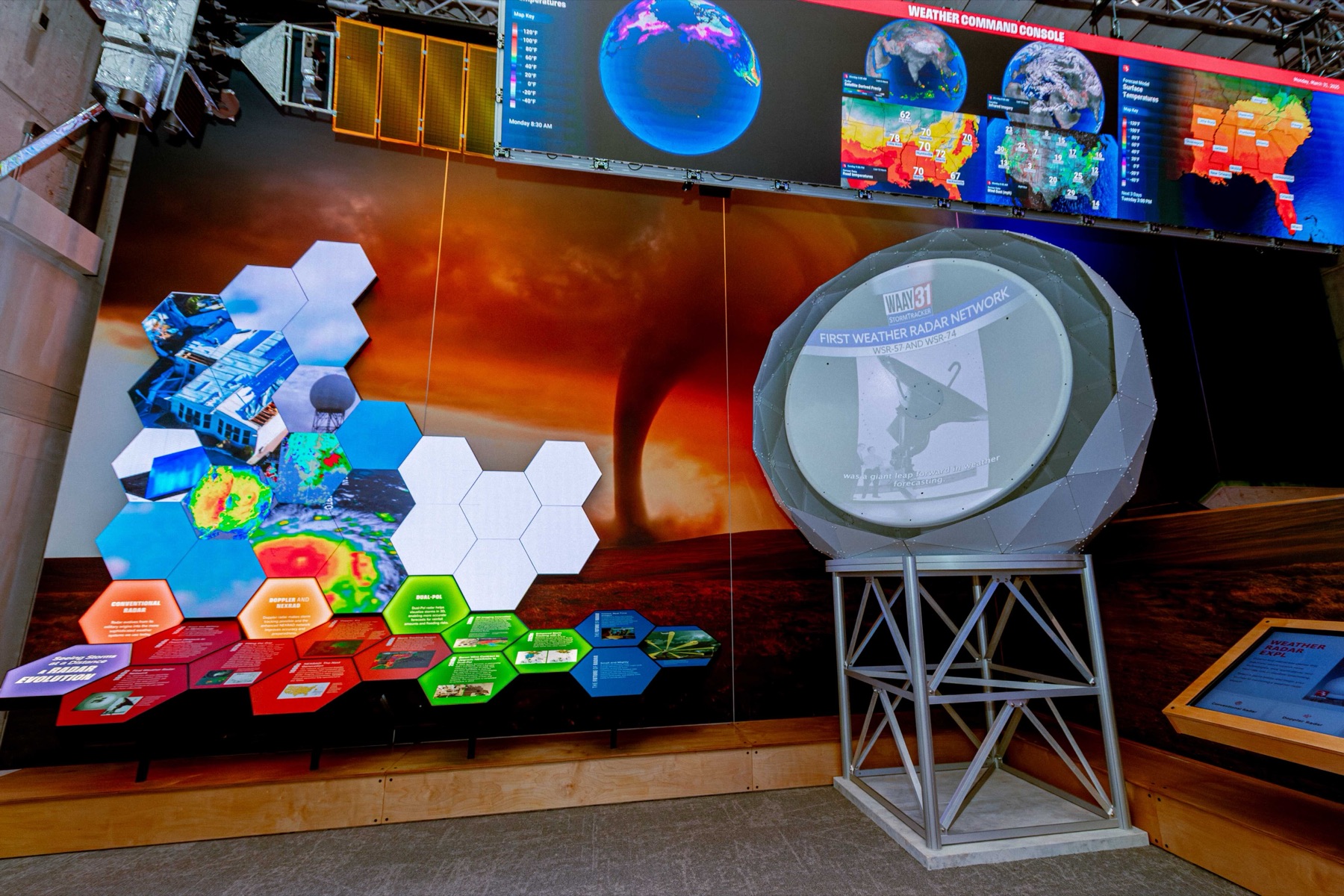
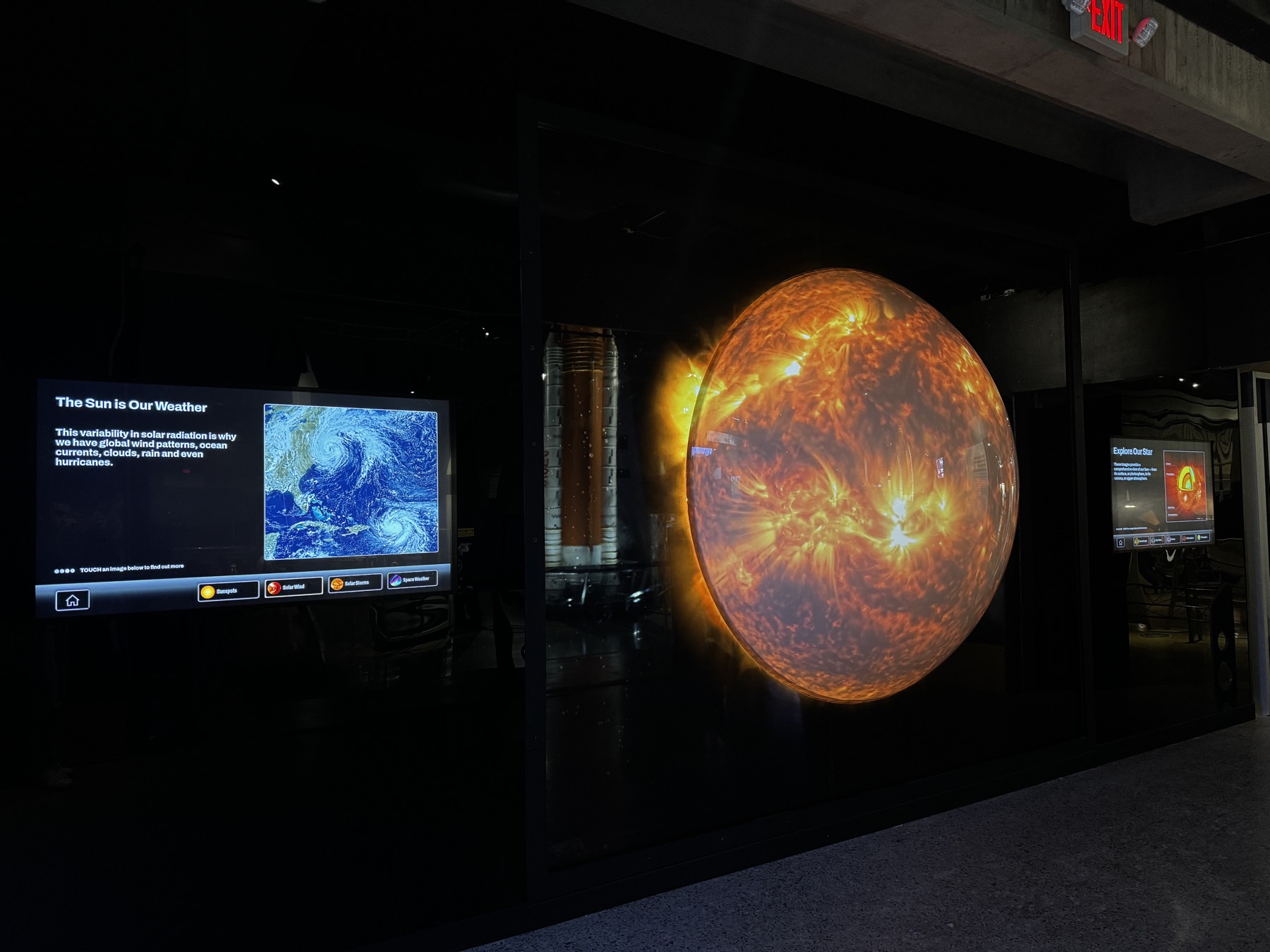
- A 3,500 sq ft exhibit at the U.S. Space & Rocket Center about how forecasts actually get made. A 24' × 14' LED wall streams live weather data, the same feeds TV meteorologists use, and 54 screens of hands-on games fill the room.
- What did I do?
- I was on it from concept through install. I programmed the content and managed the content team.
- The tricky part?
- The wall runs my HTML layout through a video processor that crashes at the wrong resolution, so every block is pinned to its exact pixel area. If a feed drops, only that block goes quiet.
- Who sees it?
- About 800,000 visitors a year. It's been open since 2025.
- Made with
- Live NASA, NOAA and Baron data, HTML, a 24' × 14' LED wall, 54 screens.
-
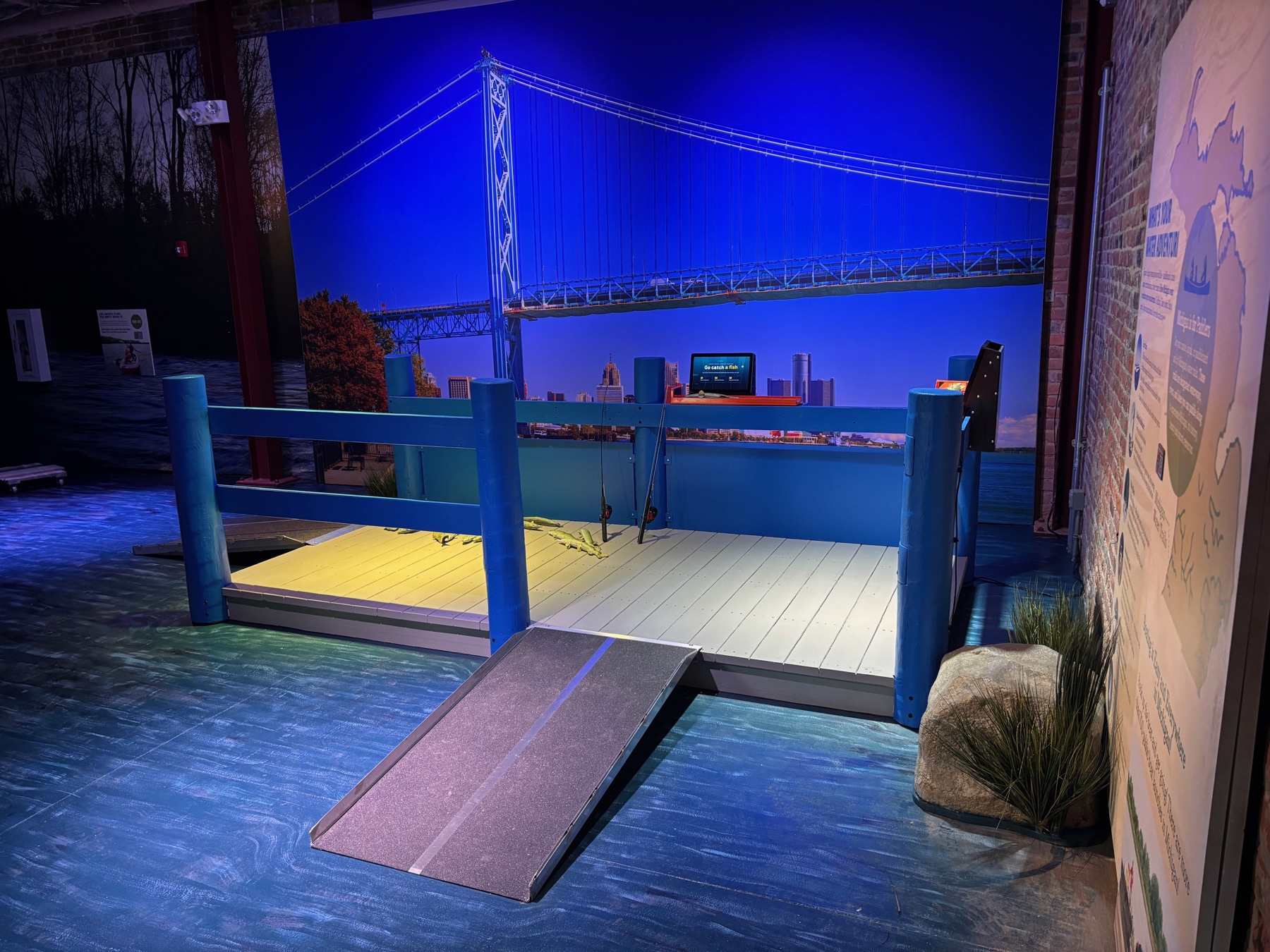
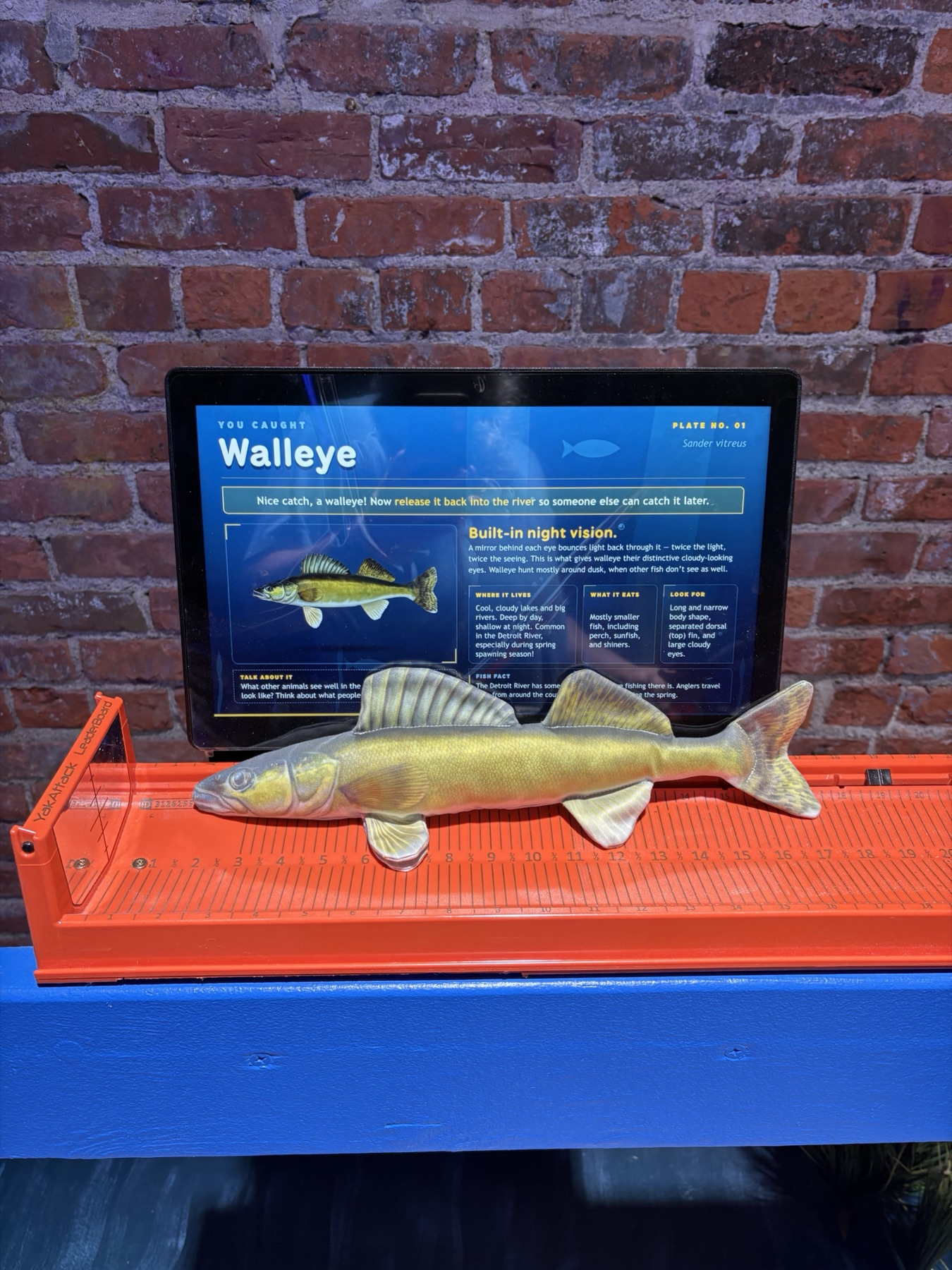
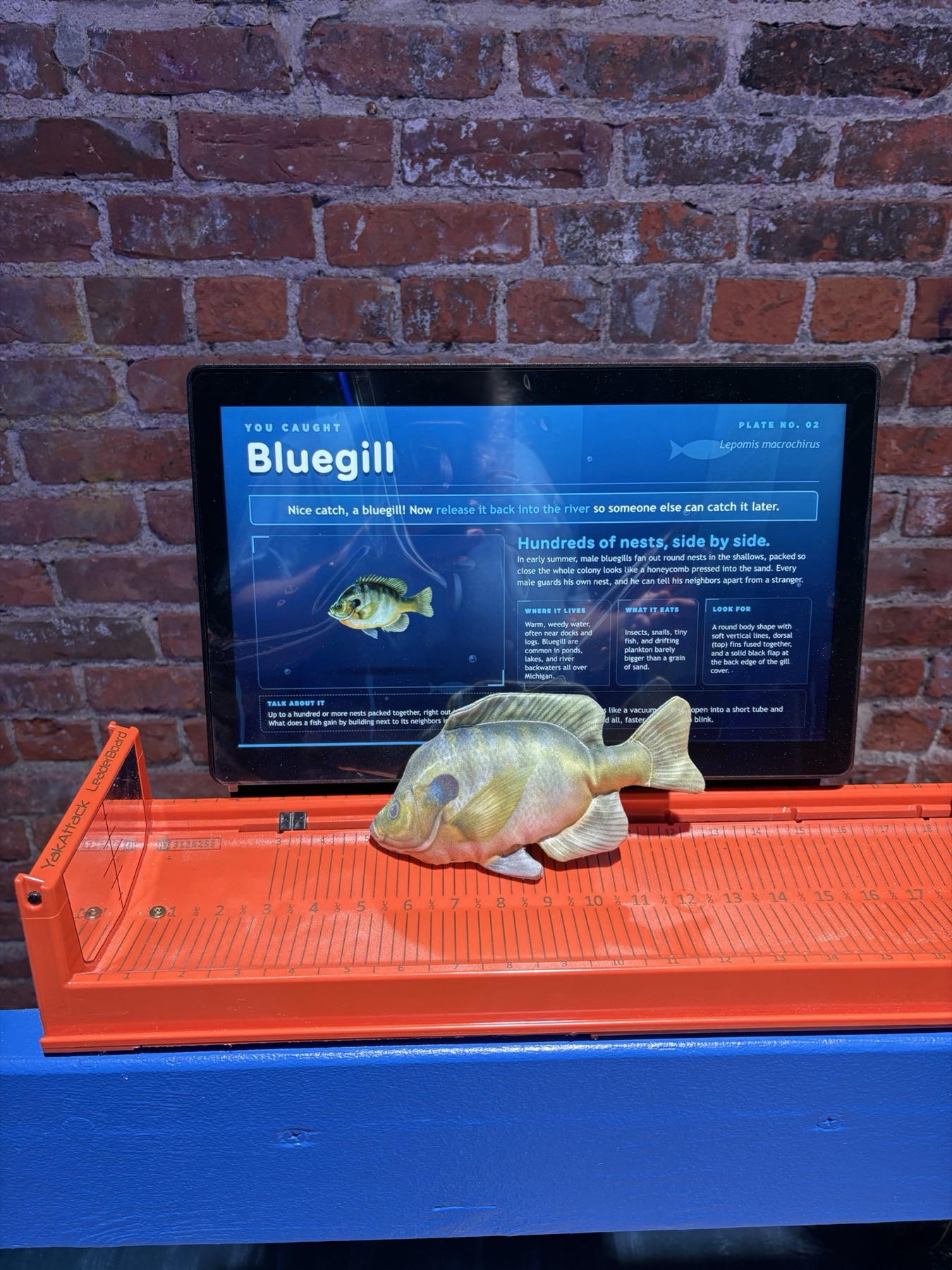
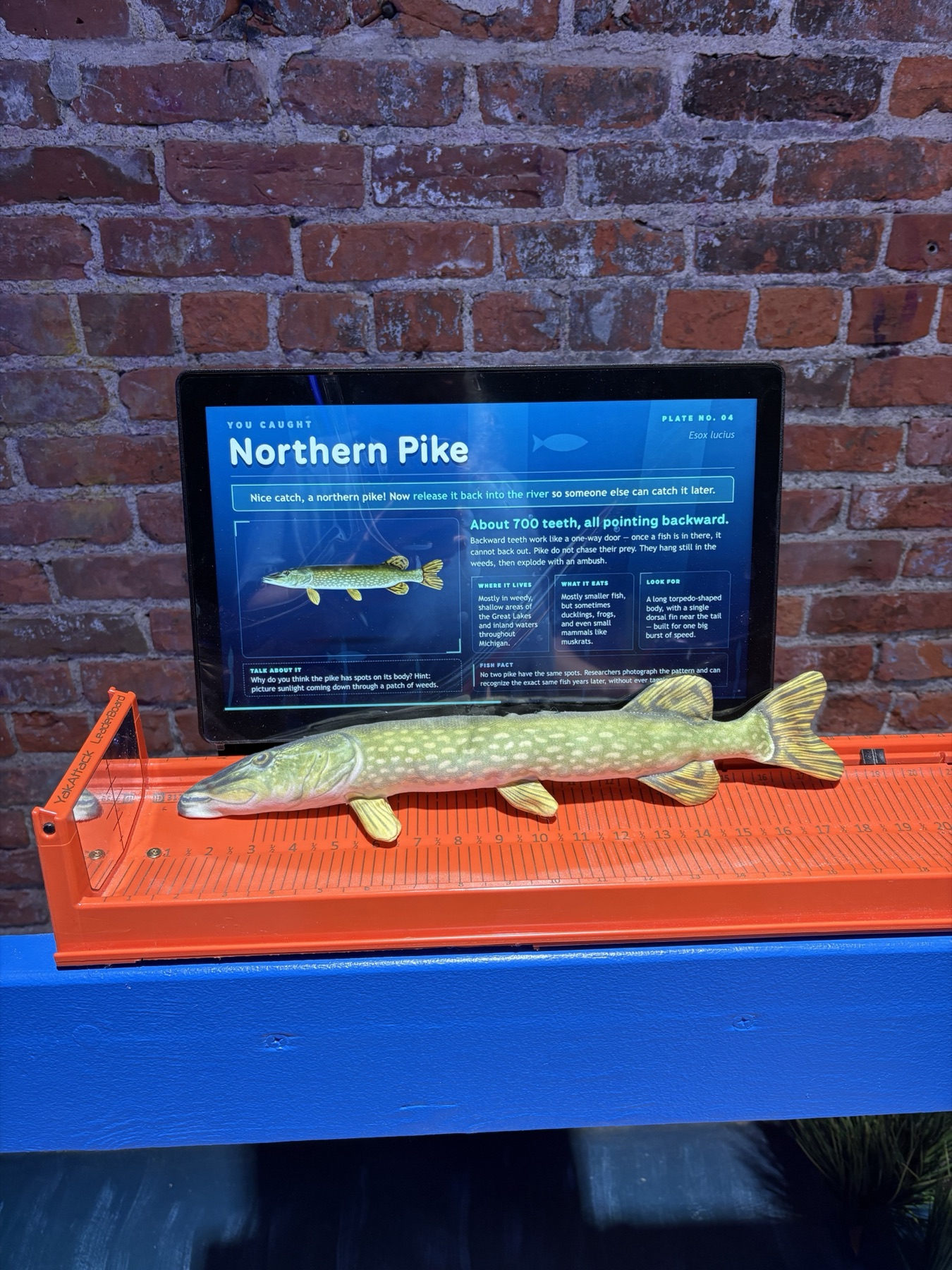
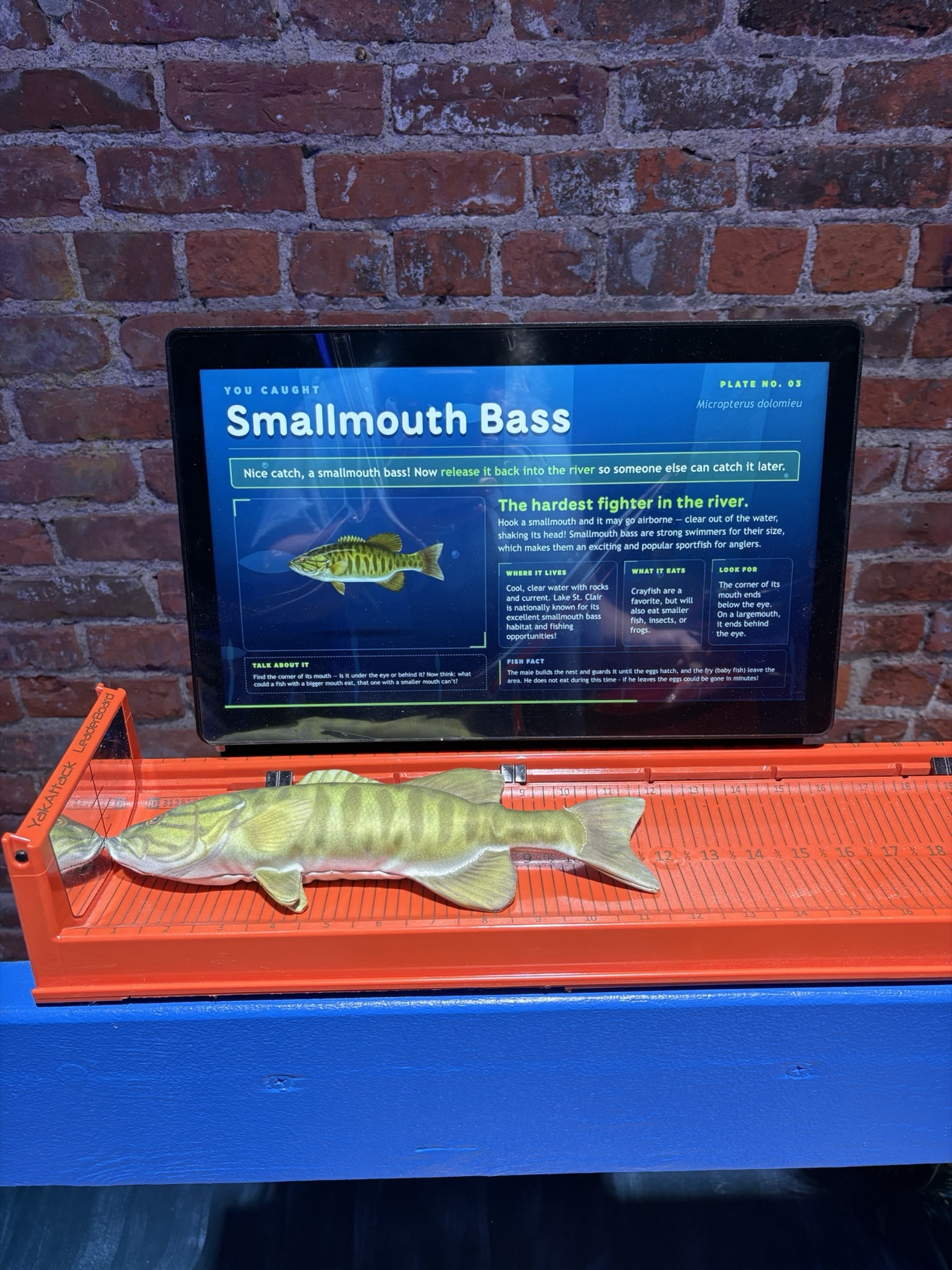
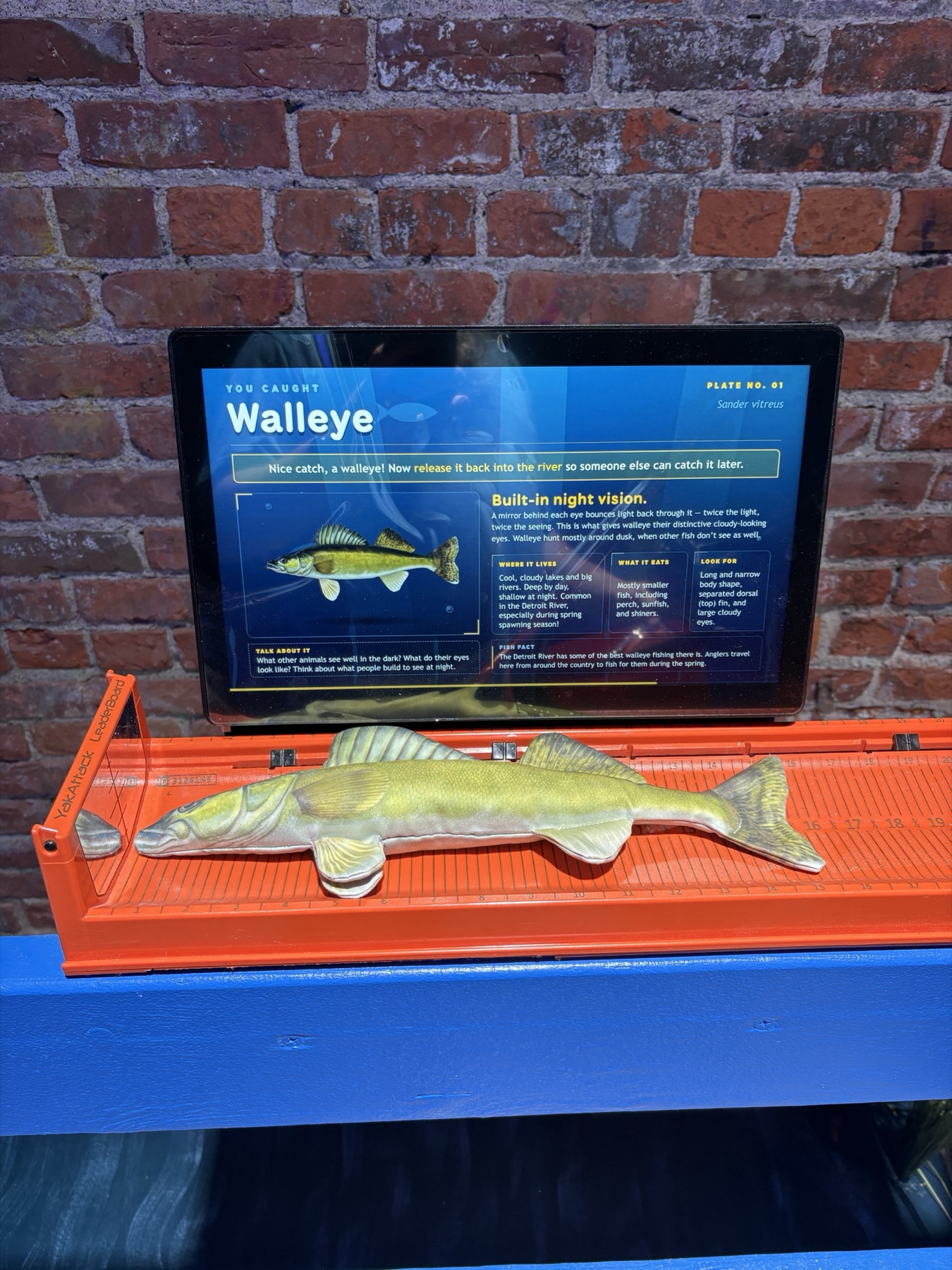
- What's this?
- Put a fish on the tray and the screen above switches to that species: walleye, bluegill, northern pike or smallmouth bass. It's at the Outdoor Adventure Center in Detroit.
- What did I do?
- I illustrated the fish, modeled them in 3D, and designed the screens they bring up.
- How does it know?
- Each fish has an RFID tag inside, and the reader picks it up. There's no button to explain. You put the fish down and the screen answers.
- Made with
- RFID, illustration, 3D modeling, screen design.
-
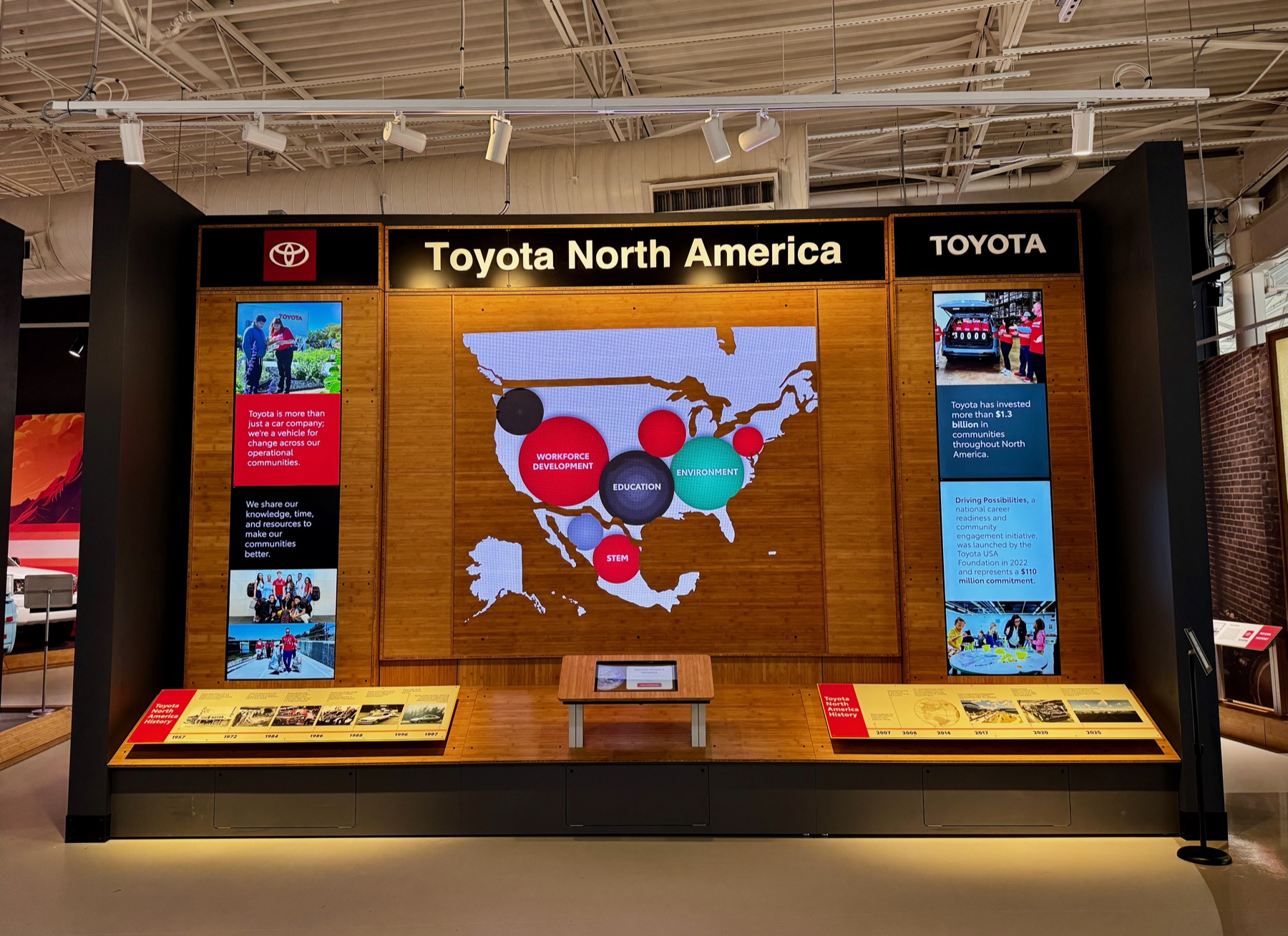
- What's this?
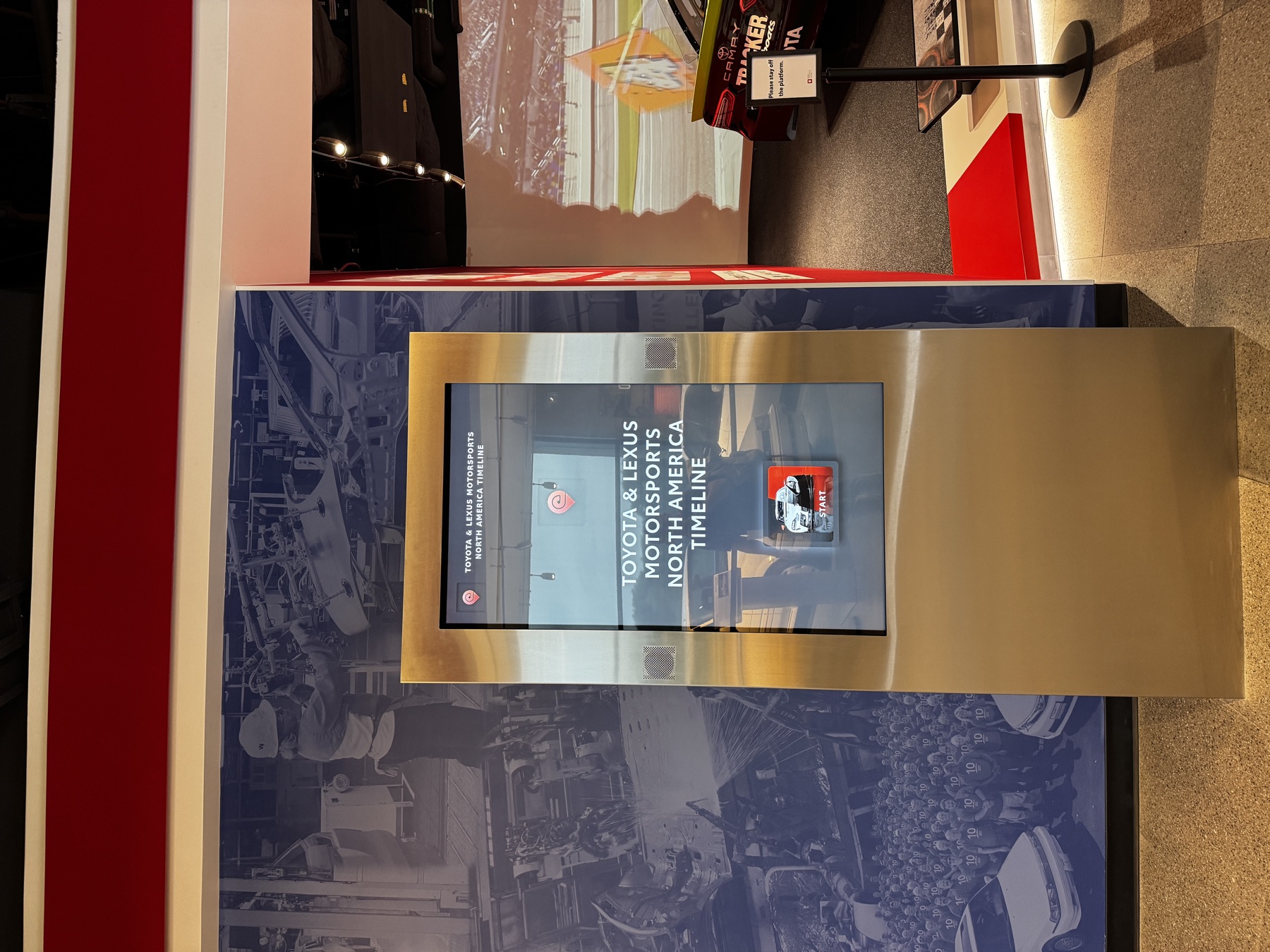
- A wall about Toyota's people, places and cars across North America, at the Toyota experience center in San Antonio.
- What did I do?
- Six applications and six video channels that run as one piece, built inside Toyota's design system.
- The tricky part?
- Twelve things have to move together. The apps talk over WebSockets, a live connection that lets every screen react at the same moment. It was the most complex build in the center, and the goal was for nobody to notice.
- Made with
- Six synced apps, WebSockets, six video channels.
-
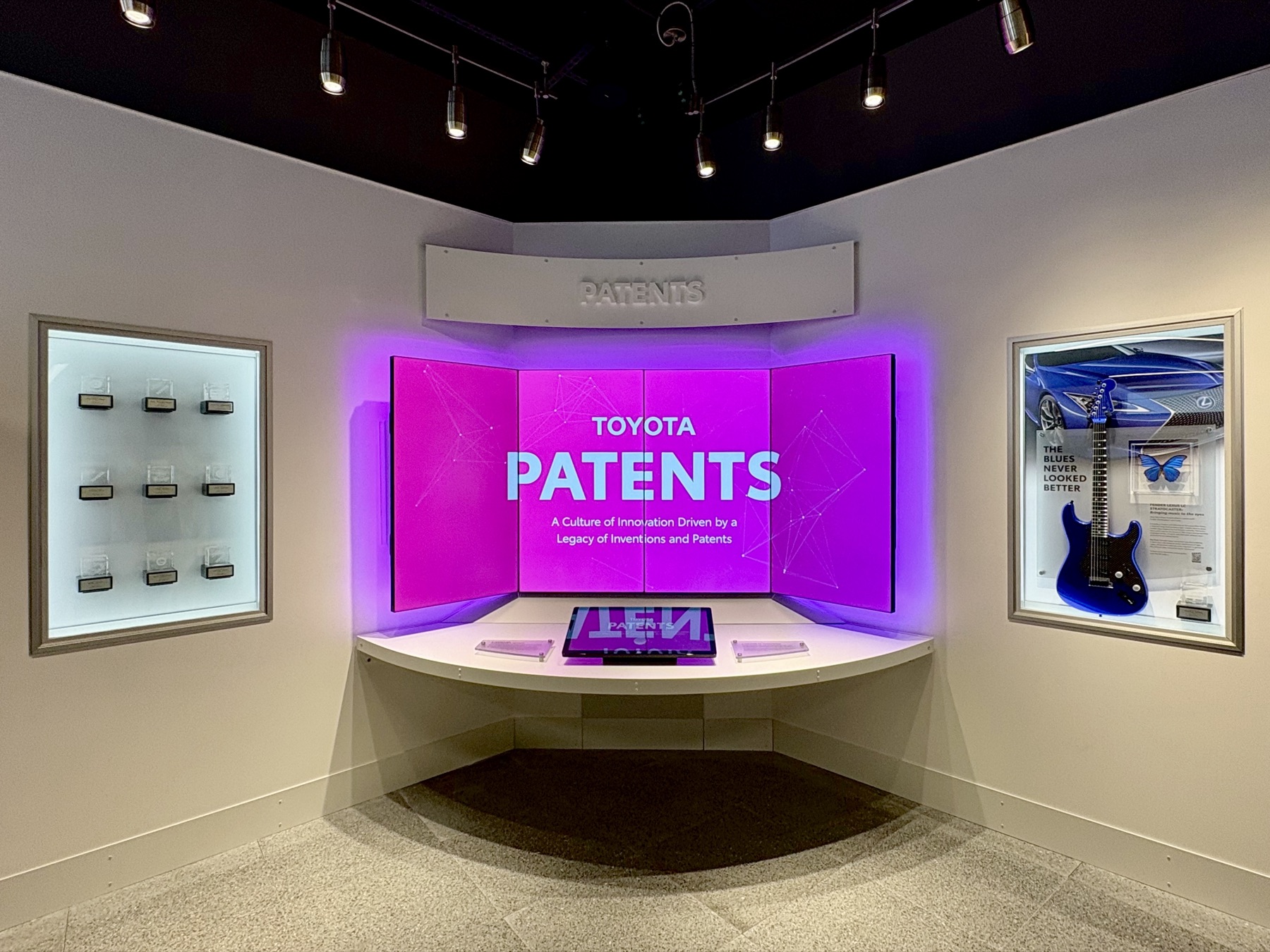
- What's this?
- Toyota holds thousands of patents that almost nobody outside R&D ever sees. This turns them into a wall you can browse, at Toyota HQ.
- How does it work?
- One touchscreen drives four displays, and the room lighting shifts as you swipe.
- Why the particles?
- Each story sits on a generated particle network, so when the colors change the room stays calm.
- Made with
- BrightSign XC2055, a Node.js WebSocket server, lighting cues. Installed 2025.
-
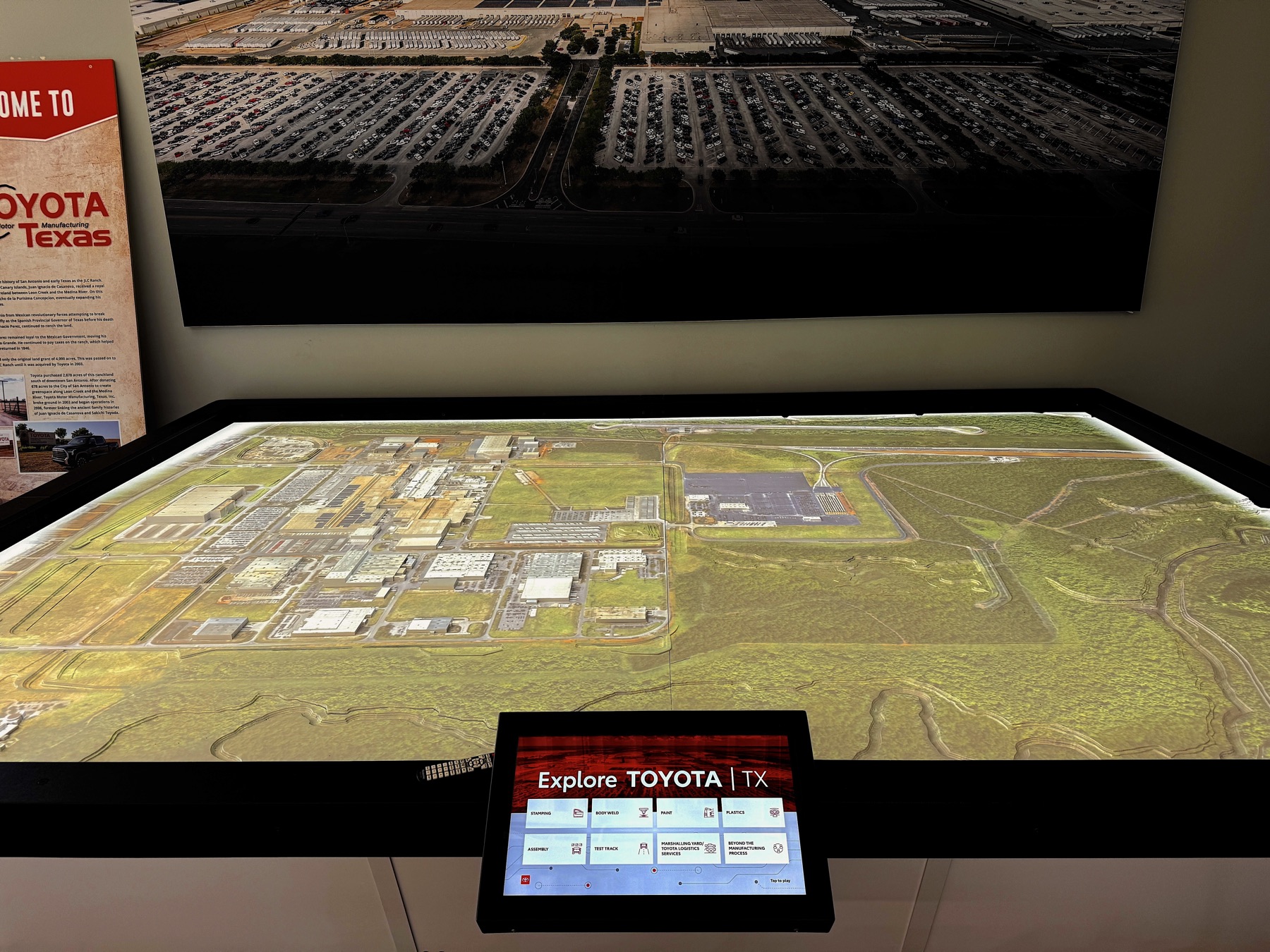
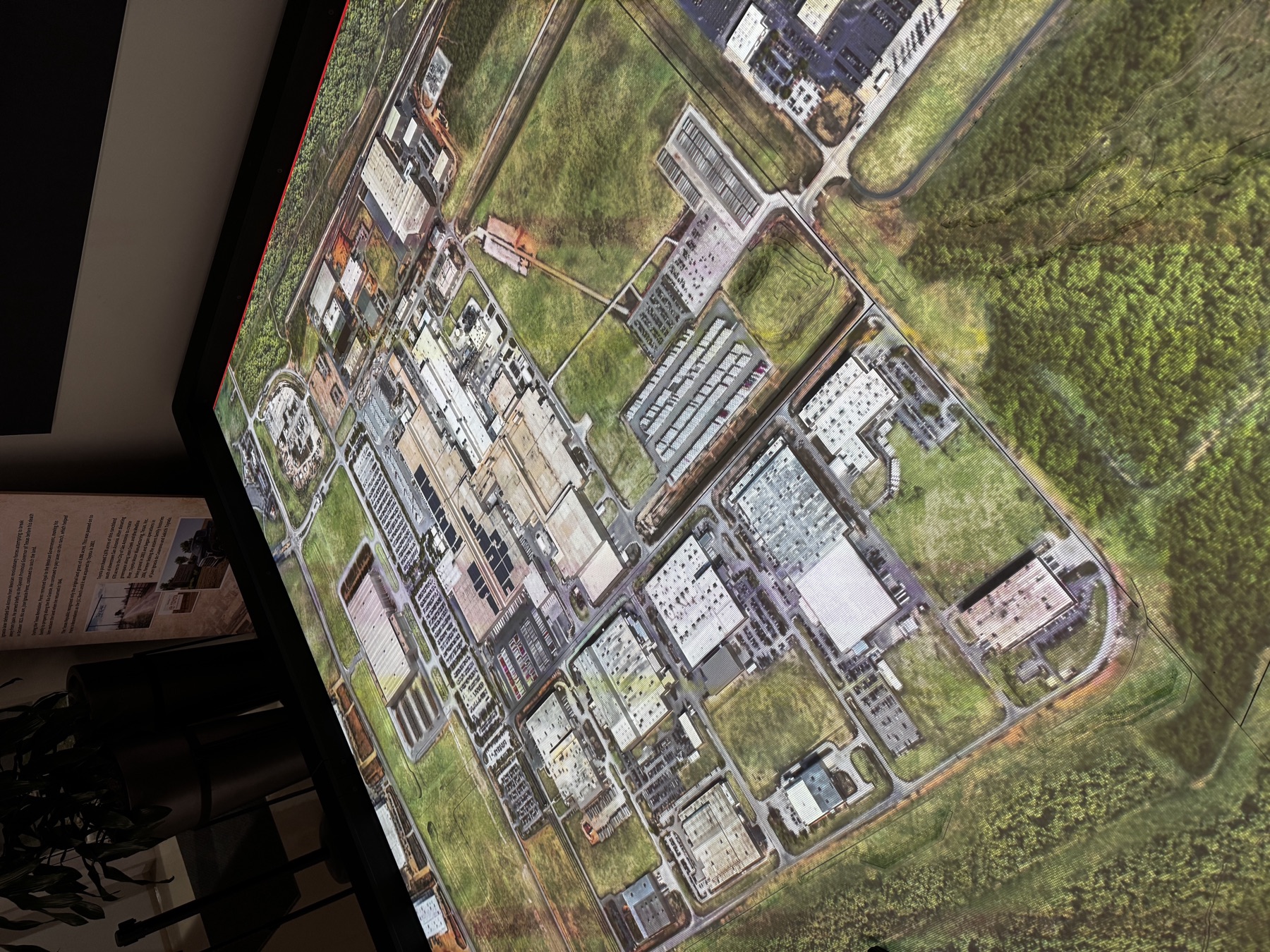
- What's this?
- A projection-mapped table at Toyota Texas showing the San Antonio plant and the land around it.
- What did I do?
- Hand-made animation, lined up to real satellite imagery and the plant's actual footprint.
- The tricky part?
- Calibration. The map has to land exactly where the geography does, or the whole table looks off.
- Made with
- Projection mapping, satellite imagery, animation.
-
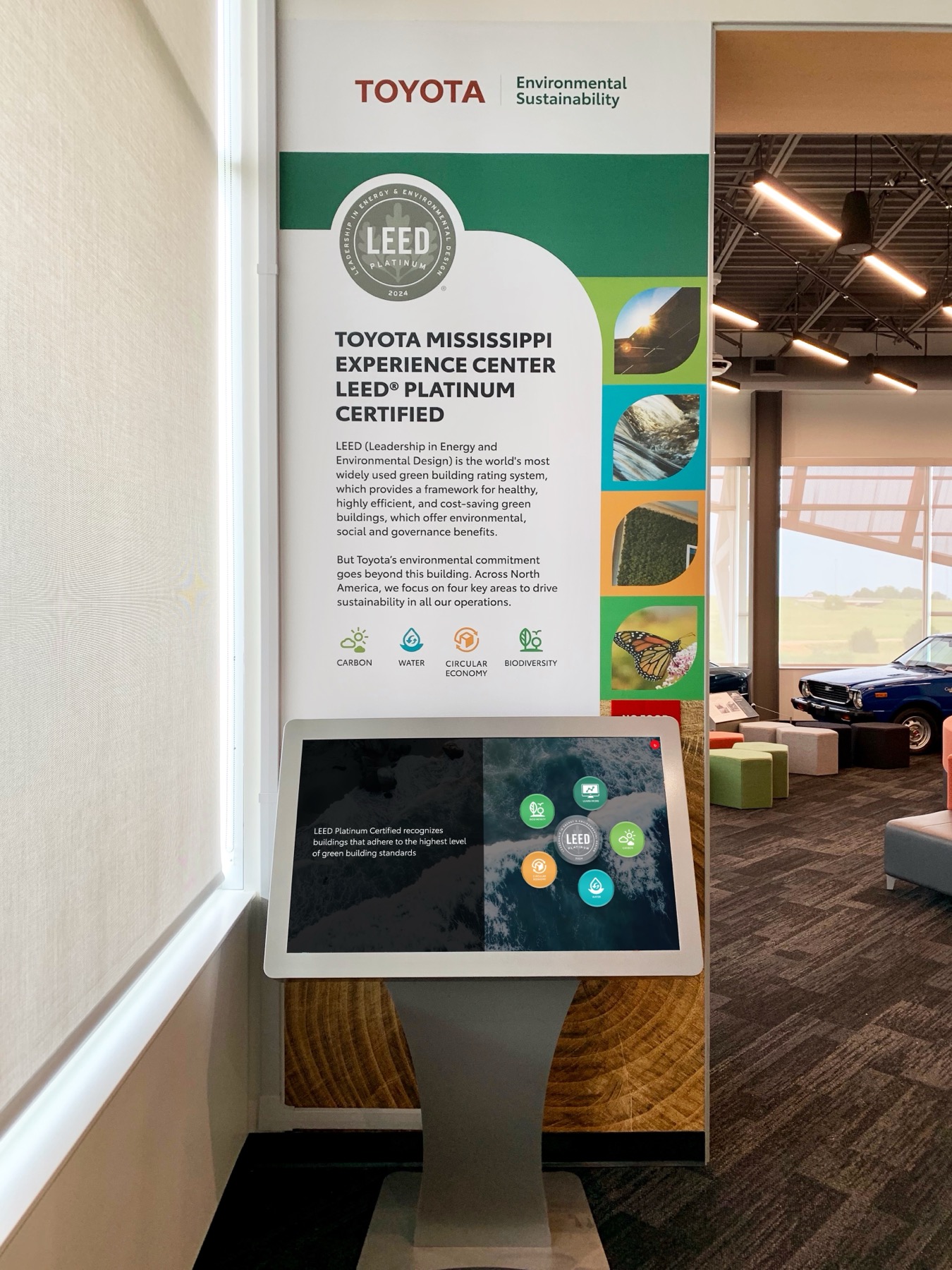
- What's this?
- Toyota Mississippi earned LEED Platinum, the highest green-building rating. It deserved more than a plaque, so it became a touchscreen story in plain language.
- Who's it for?
- Everyone. It's built to ADA reach ranges, and an attract loop resets it for the next guest.
- Made with
- Touchscreen, accessible design, attract loop.
-
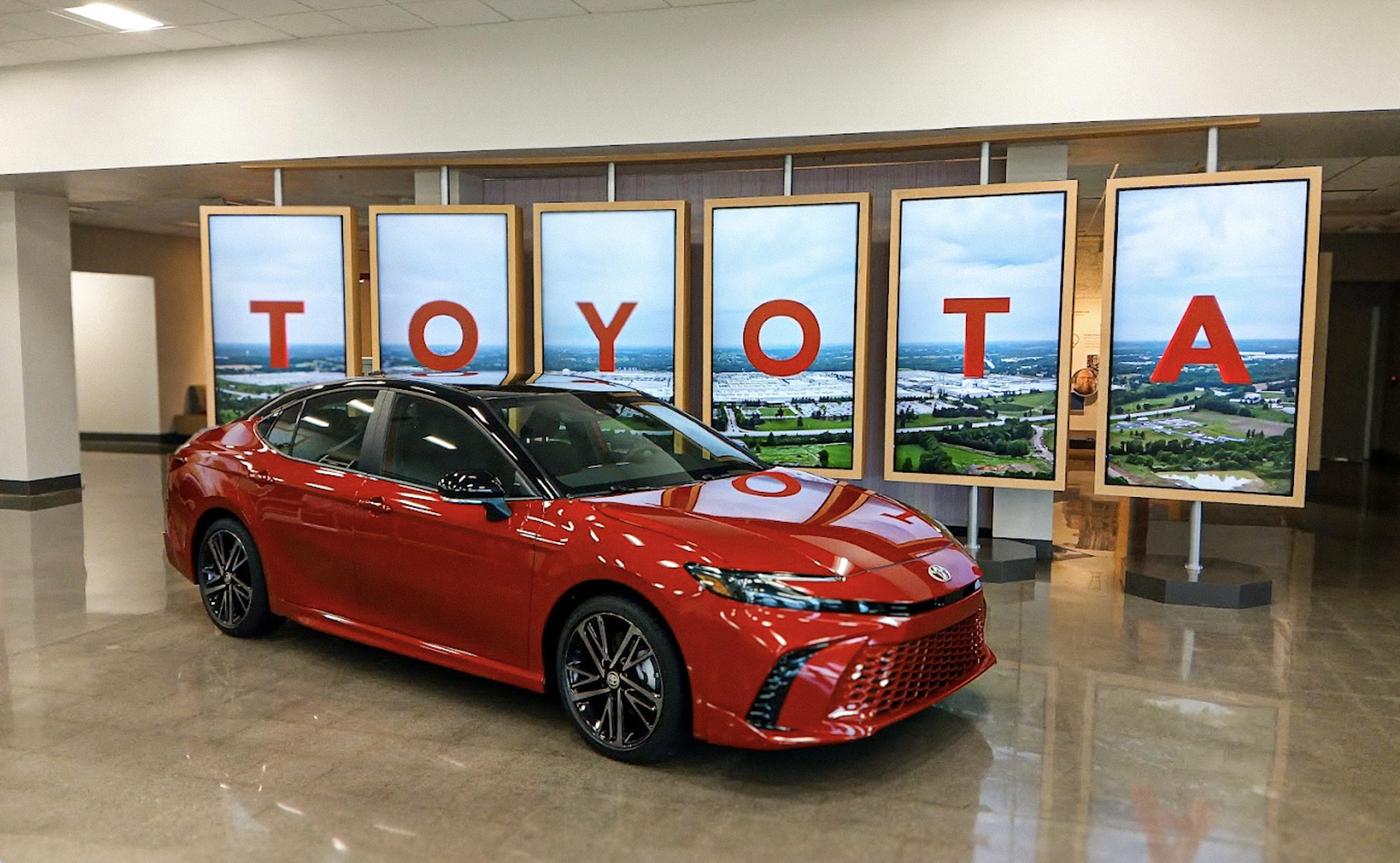
- What's this?
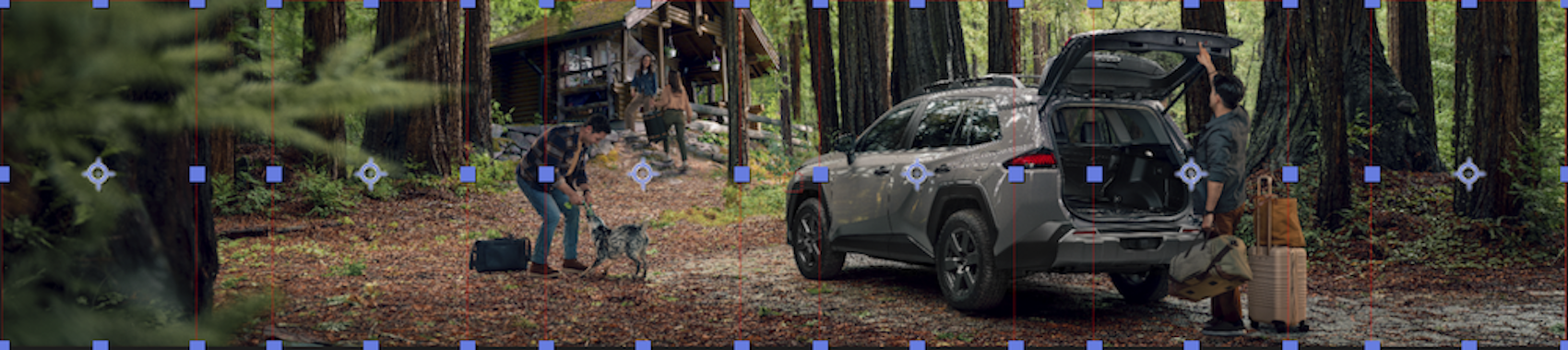
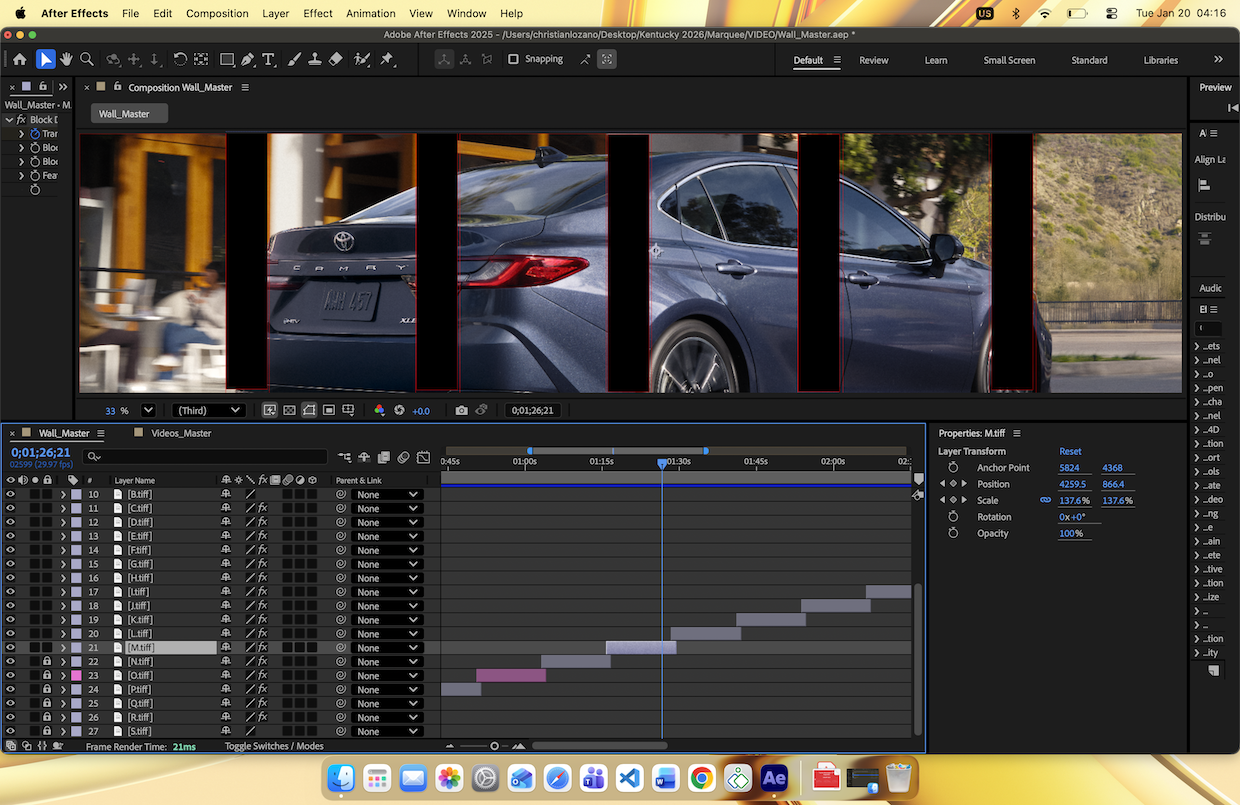
- The welcome video for the six-screen marquee at Toyota Motor Manufacturing Kentucky.
- What did I do?
- Edited and animated it.
- The tricky part?
- The screens have real gaps between them, called mullions. I rebuilt the panel layout in After Effects and edited to it, because anything that ignores the gaps looks broken once it's up.
- Made with
- After Effects, motion design, video production.
-
- What's this?
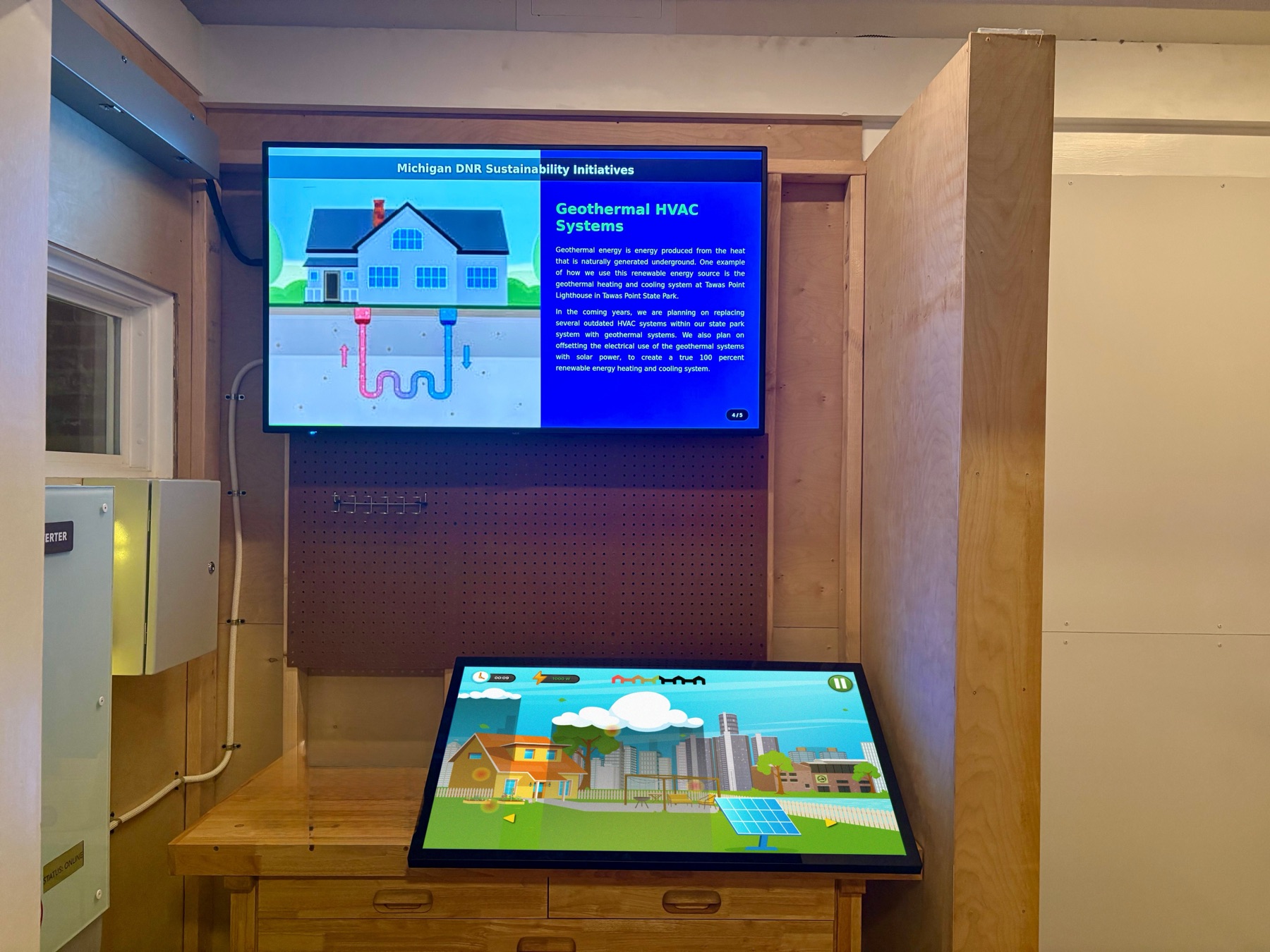
- A solar power game for kids. Drag panels across a cartoon Detroit skyline, chase the sun, dodge the clouds.
- What did I do?
- The game design and the illustration.
- Why so short?
- A station that takes three minutes per kid holds up a whole school group, so the rounds are short on purpose.
- Made with
- Game design, illustration, touchscreen.
-
- What's this?
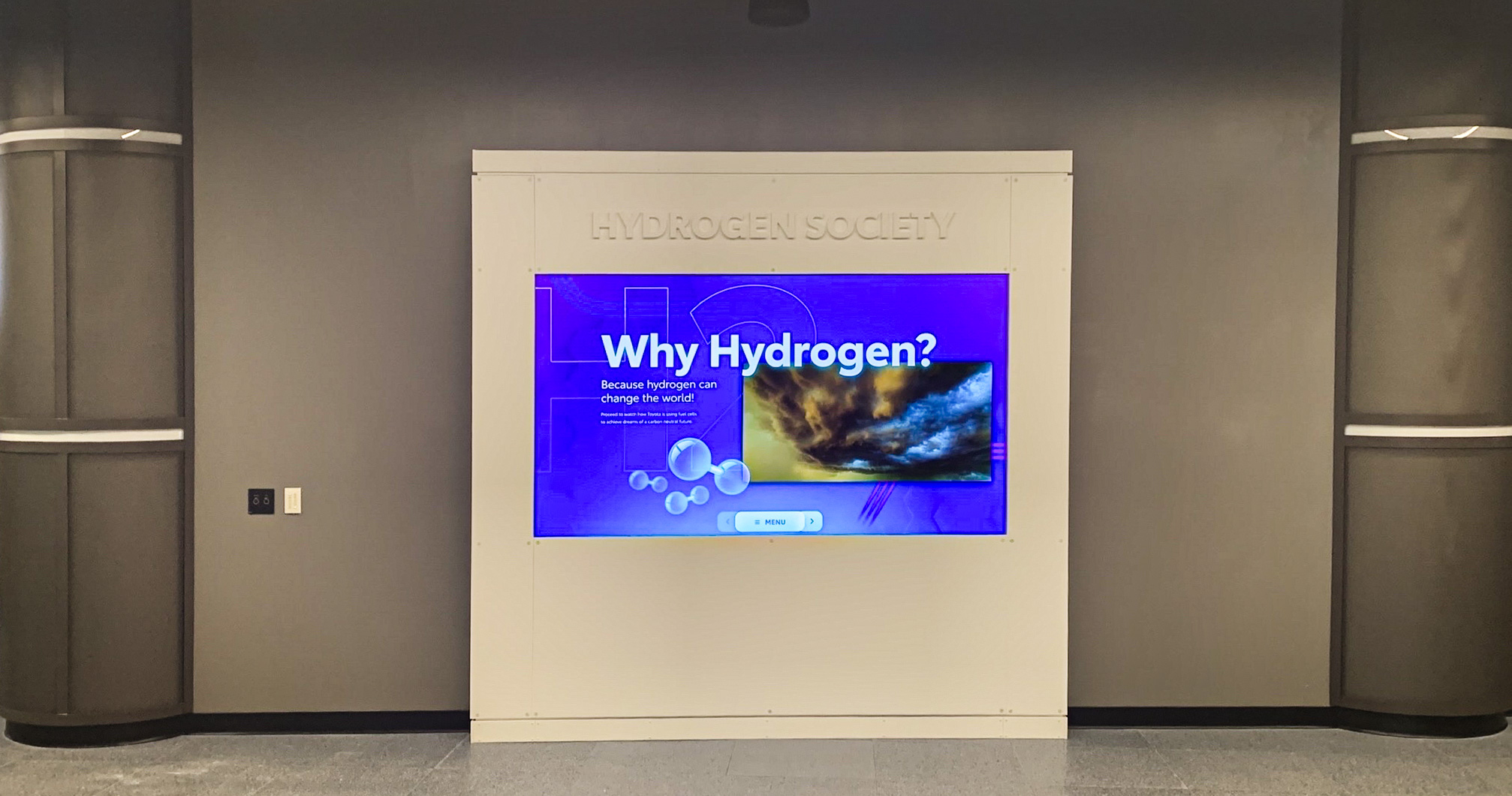
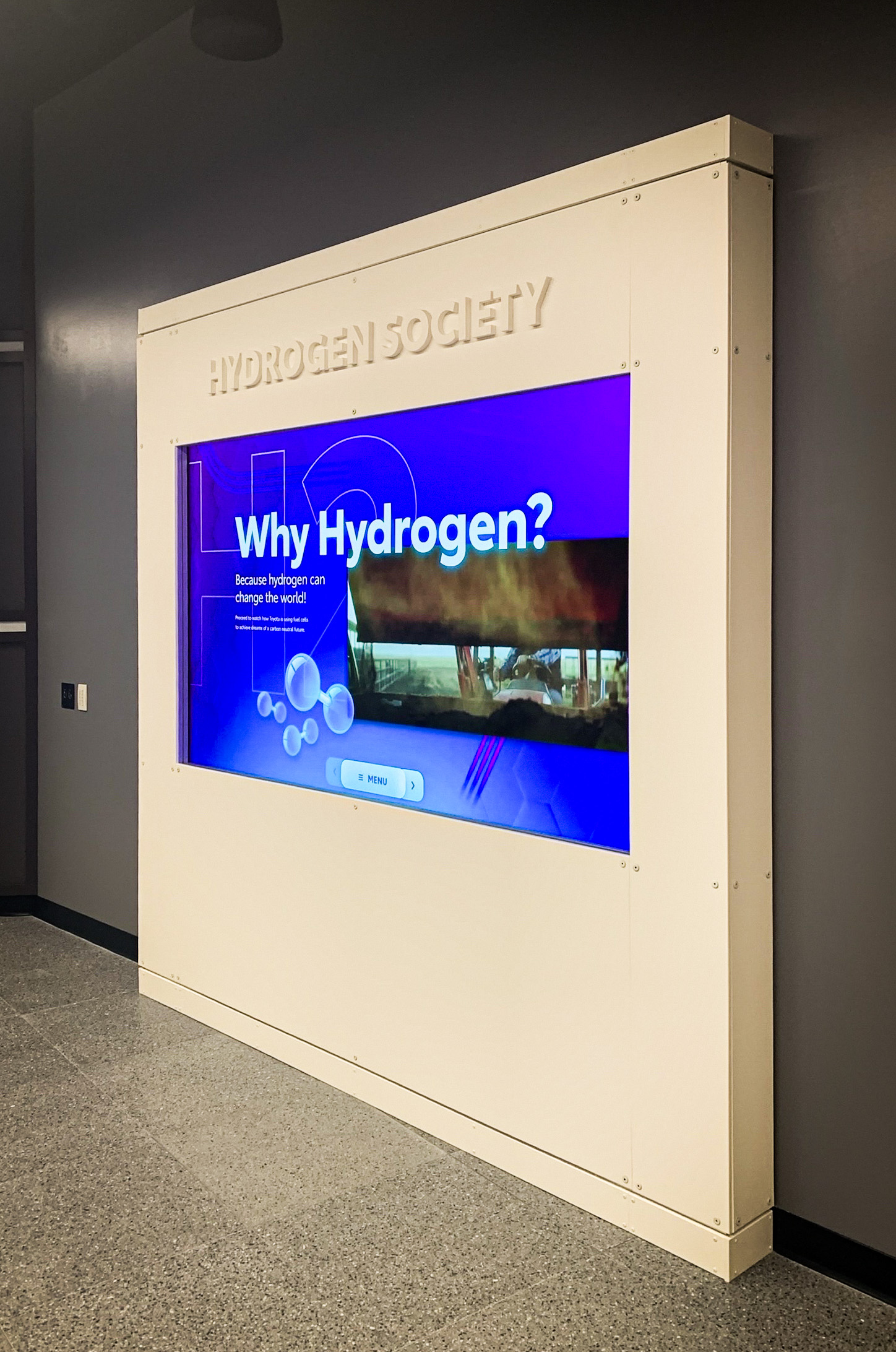
- An 80-inch touchscreen telling Toyota's hydrogen story, at Toyota HQ.
- What did I do?
- It started as a designer's Photoshop file. I made it live: animated, touchable, with video behind it.
- How close?
- About 95% true to the original design, in 1080p and 4K versions.
- Made with
- Web application, 80″ touchscreen, video.
-
- What's this?
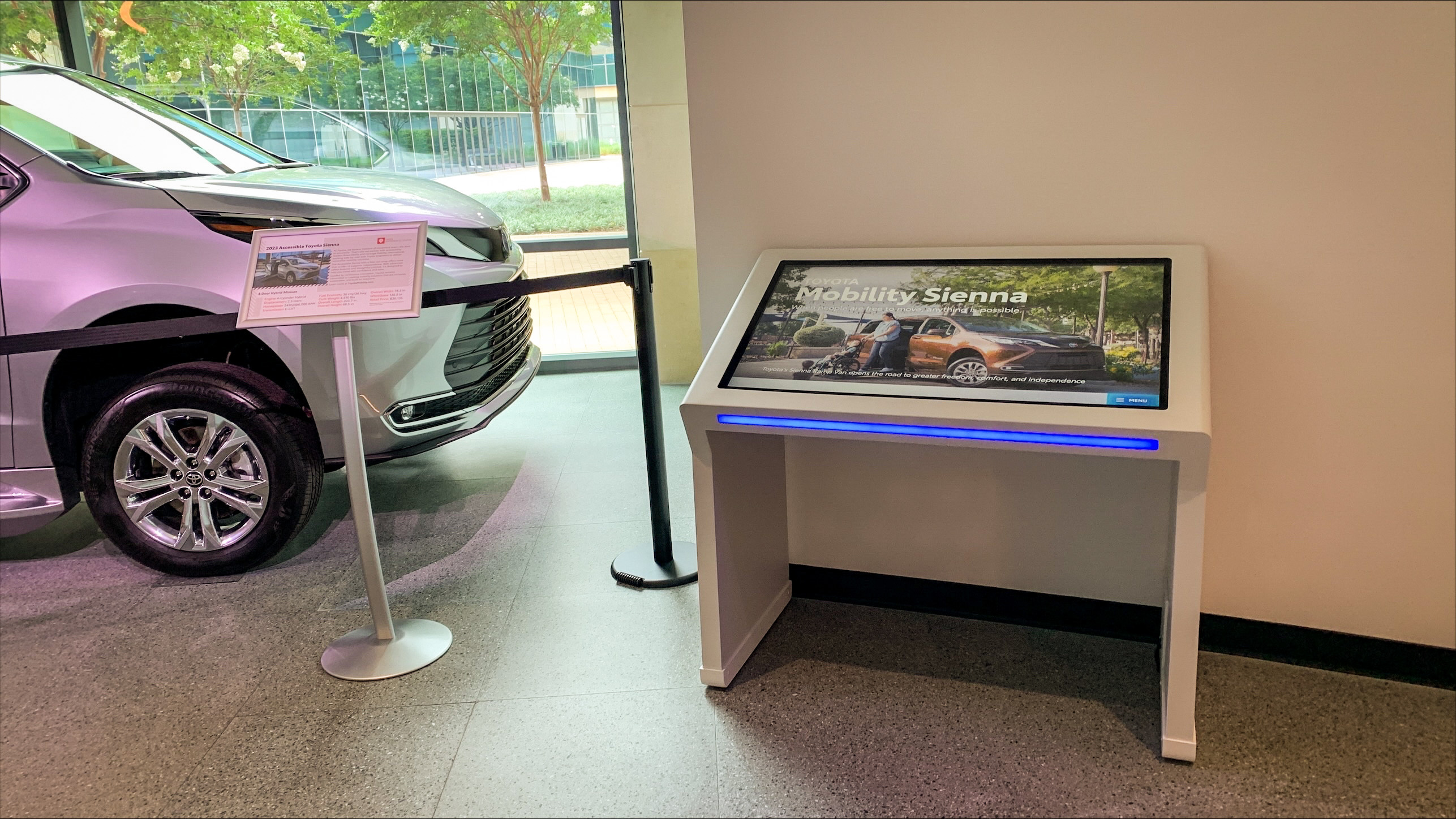
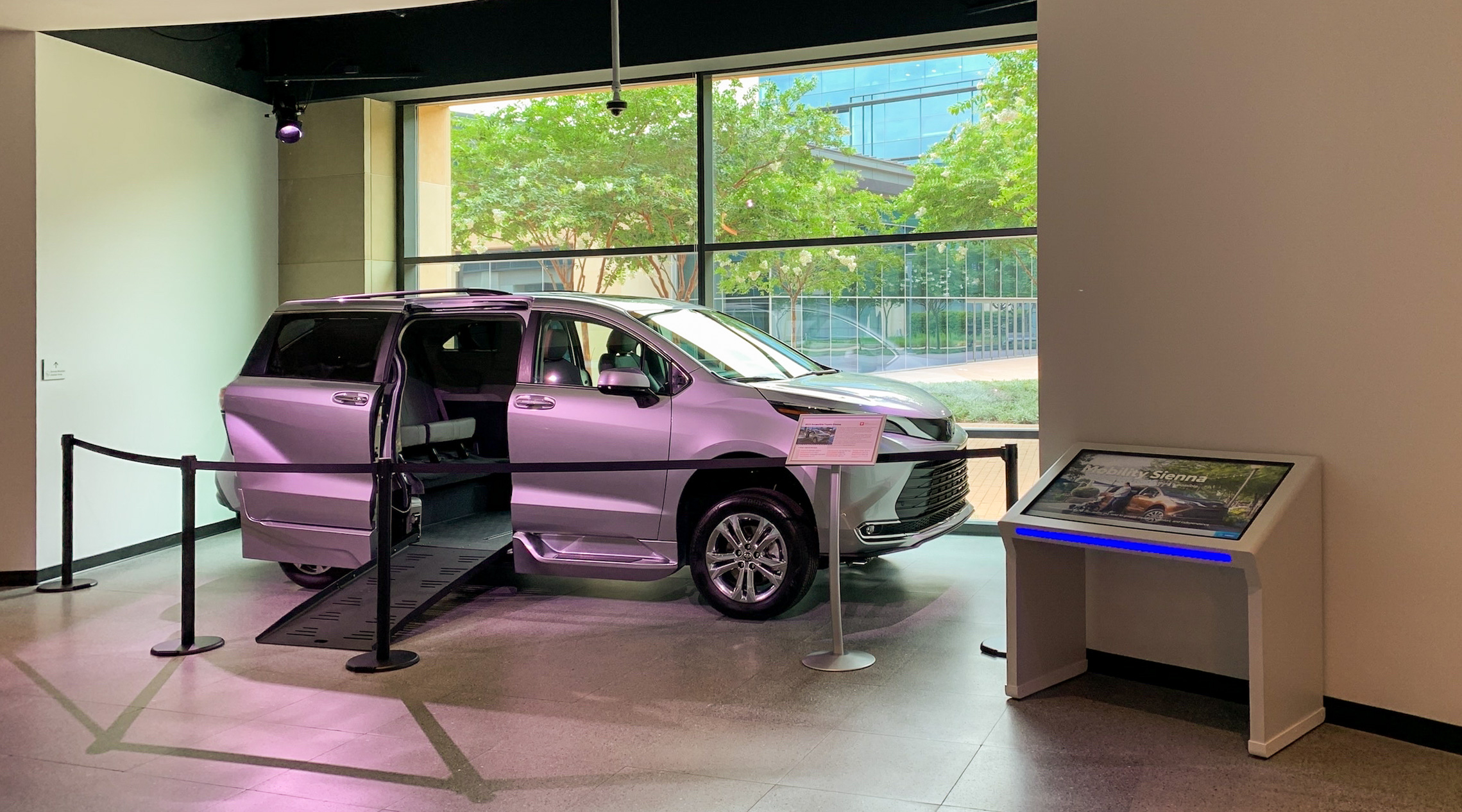
- A kiosk about the Sienna's role in accessible mobility, at Toyota HQ.
- What did I do?
- The client sent raw content. The concept, the flow and the screen design came from me. I worked it out in Photoshop and programmed it on BrightSign.
- Why BrightSign?
- Those players boot straight to content and keep running. Everything on screen can be reached and read from a wheelchair.
- Made with
- BrightSign, Photoshop, ADA guidelines.
-
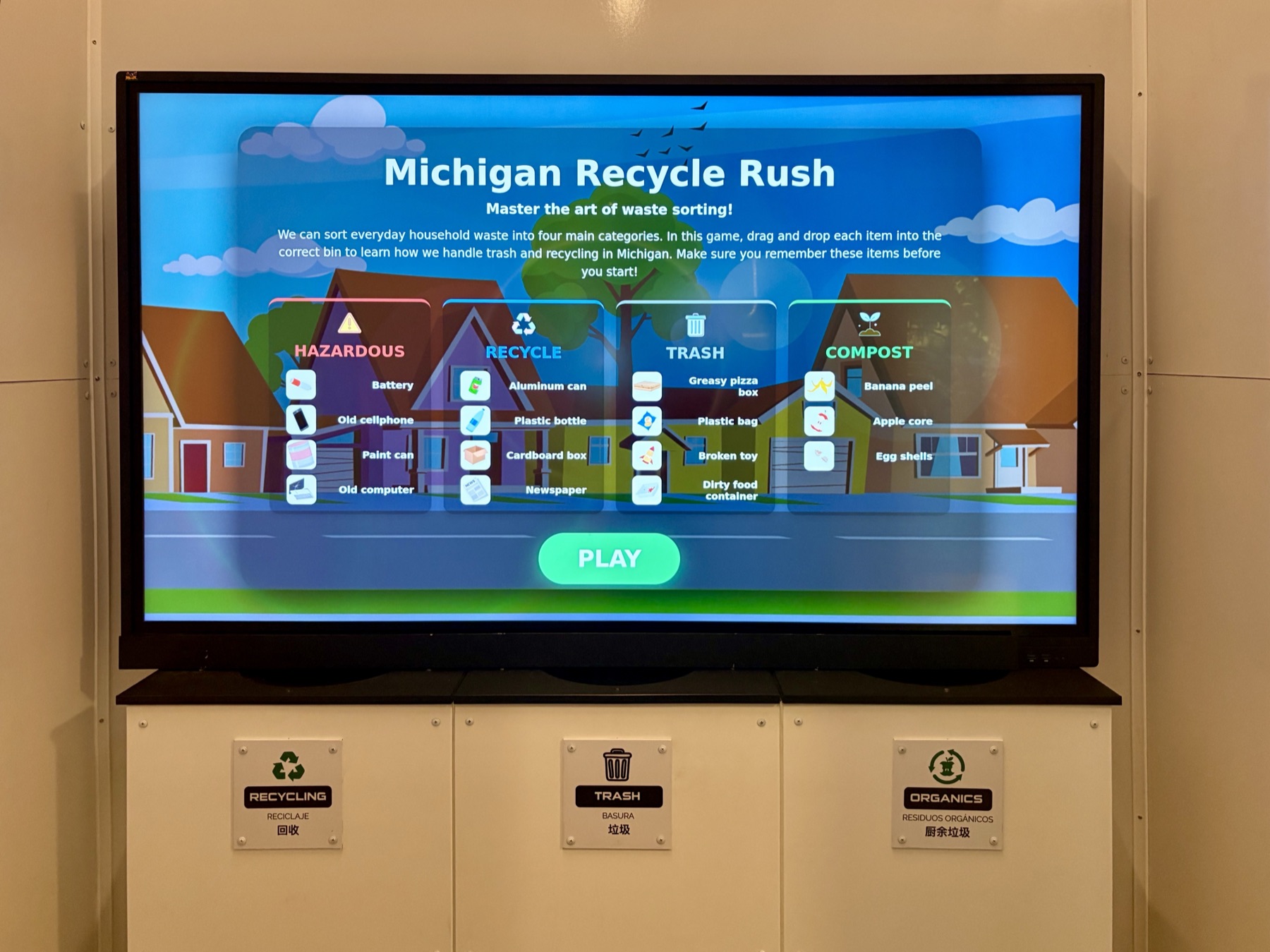
- What's this?
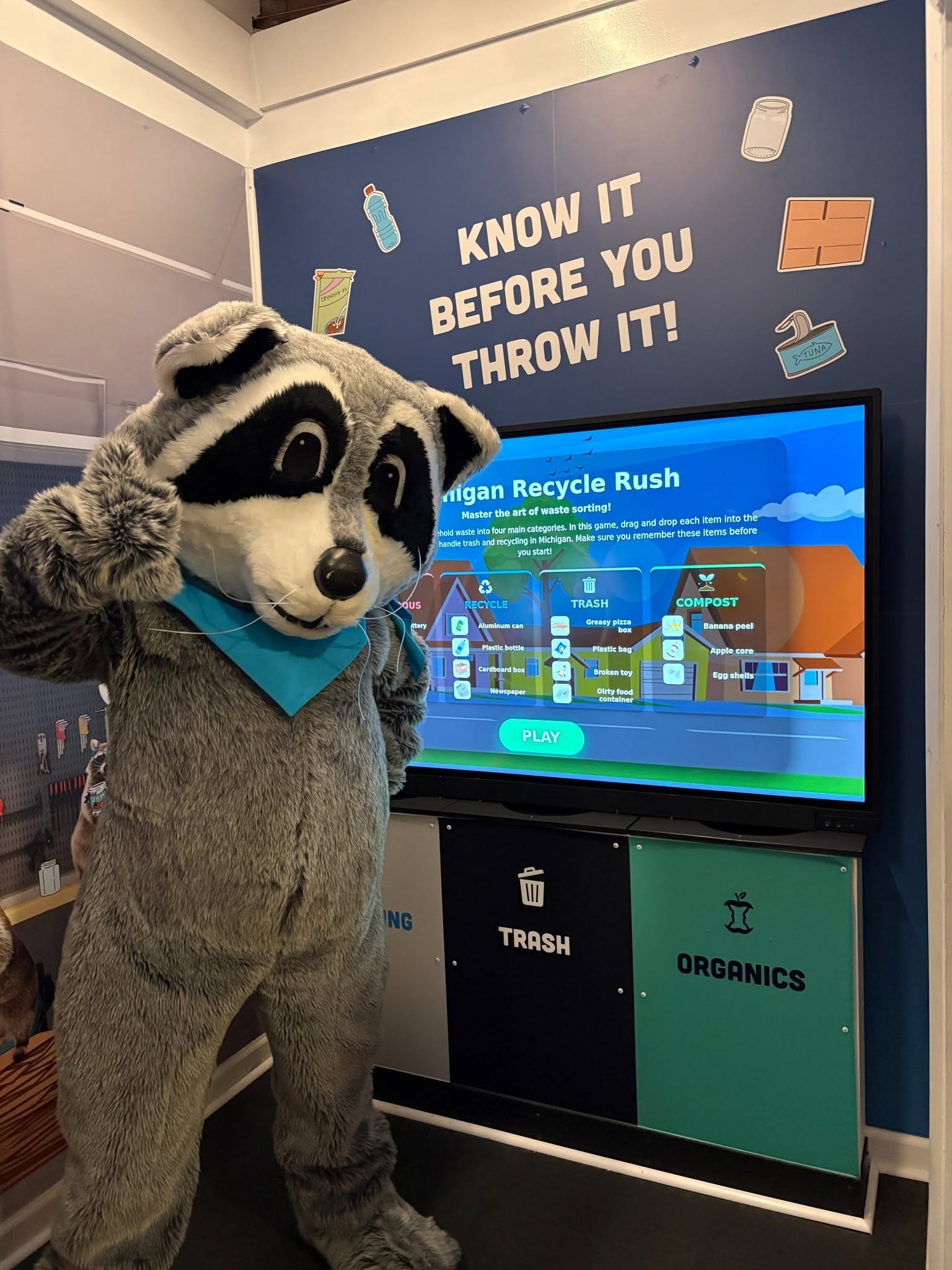
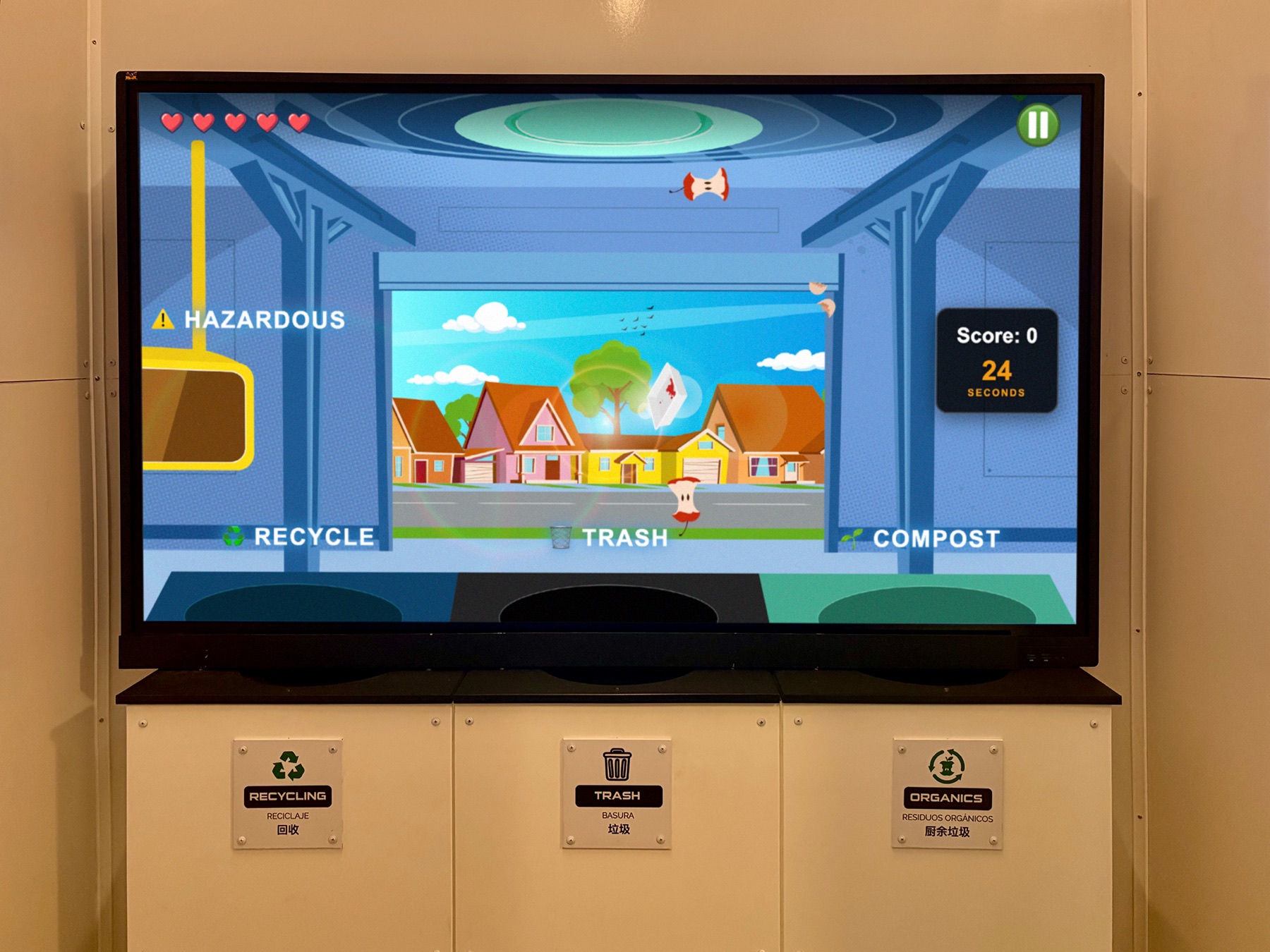
- Banana peel, pizza box, bottle: which bin? A sorting game for kids.
- Why Detroit's rules?
- The game uses Detroit's actual recycling rules, so what a kid learns at the museum is still true at home.
- Made with
- Game design, illustration, touchscreen.
-
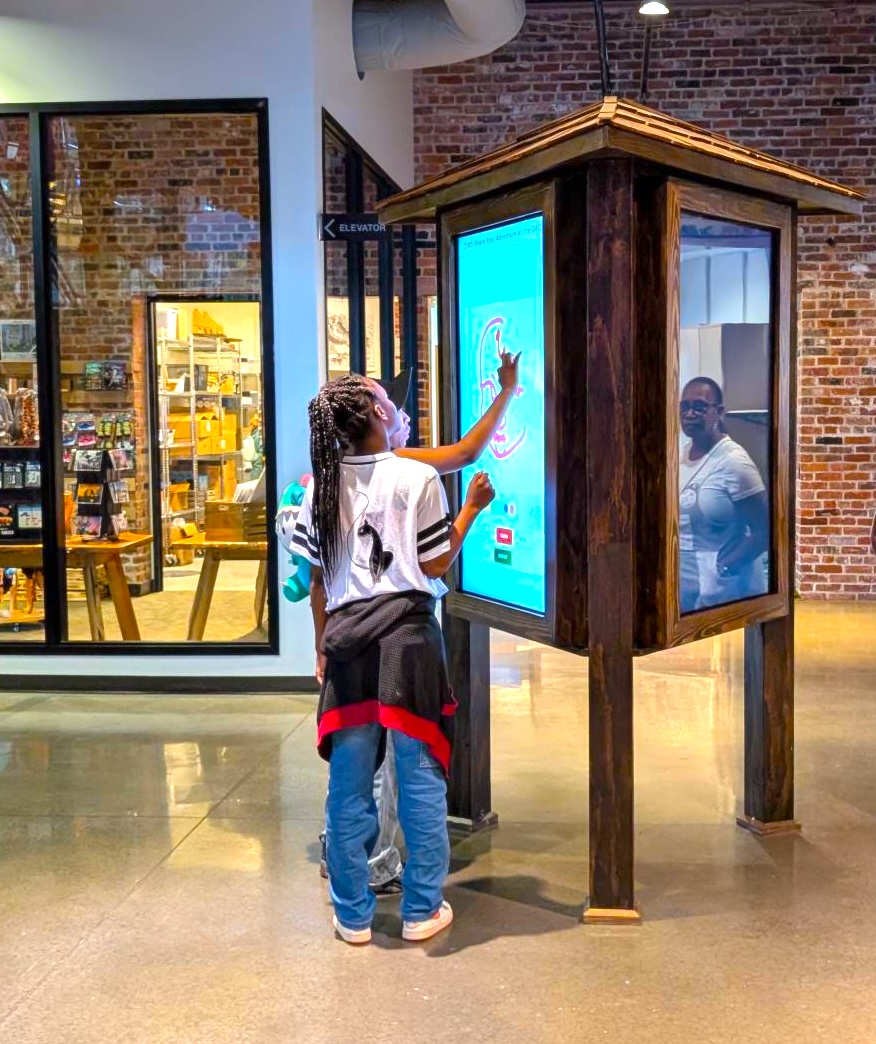
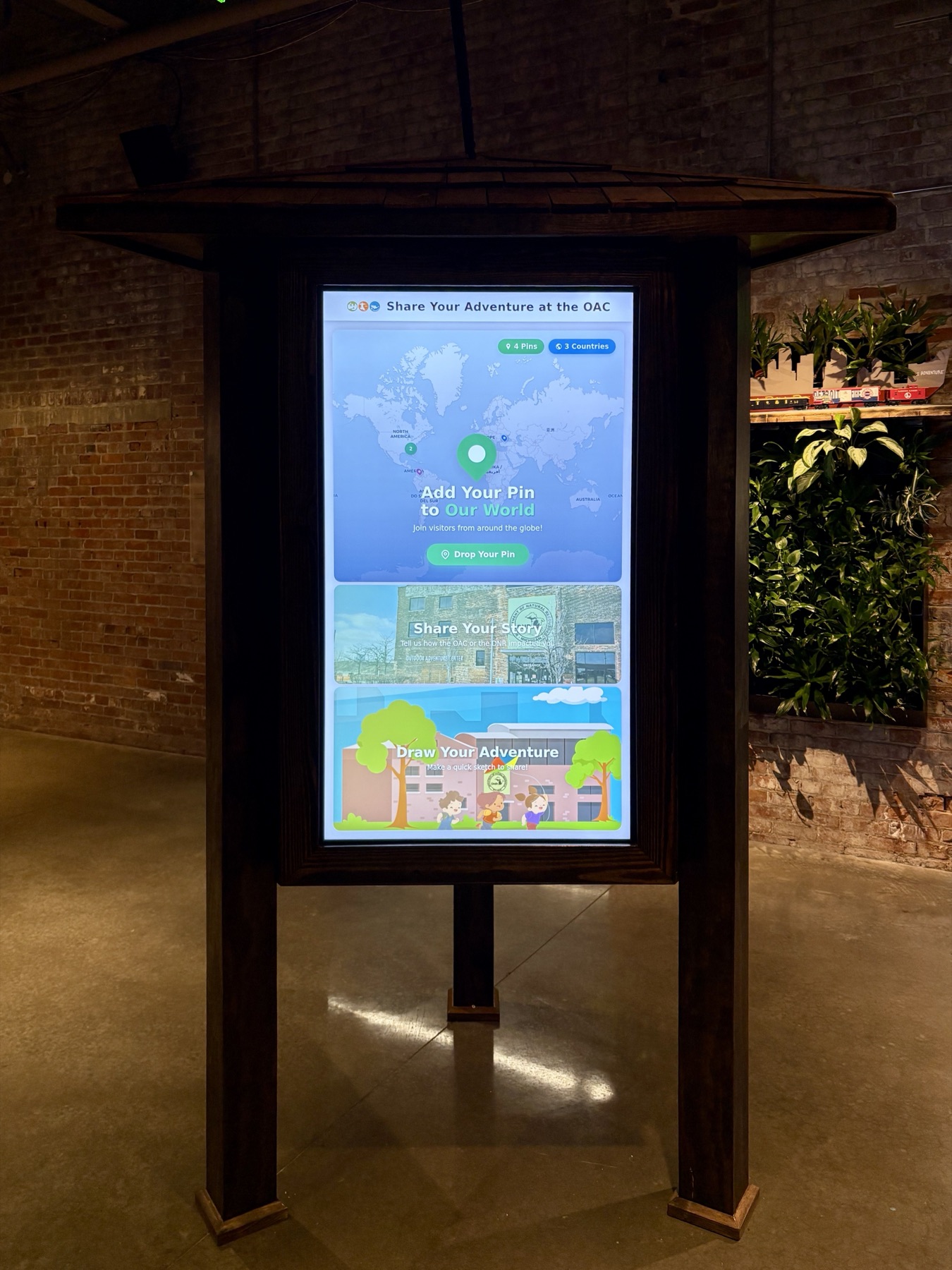
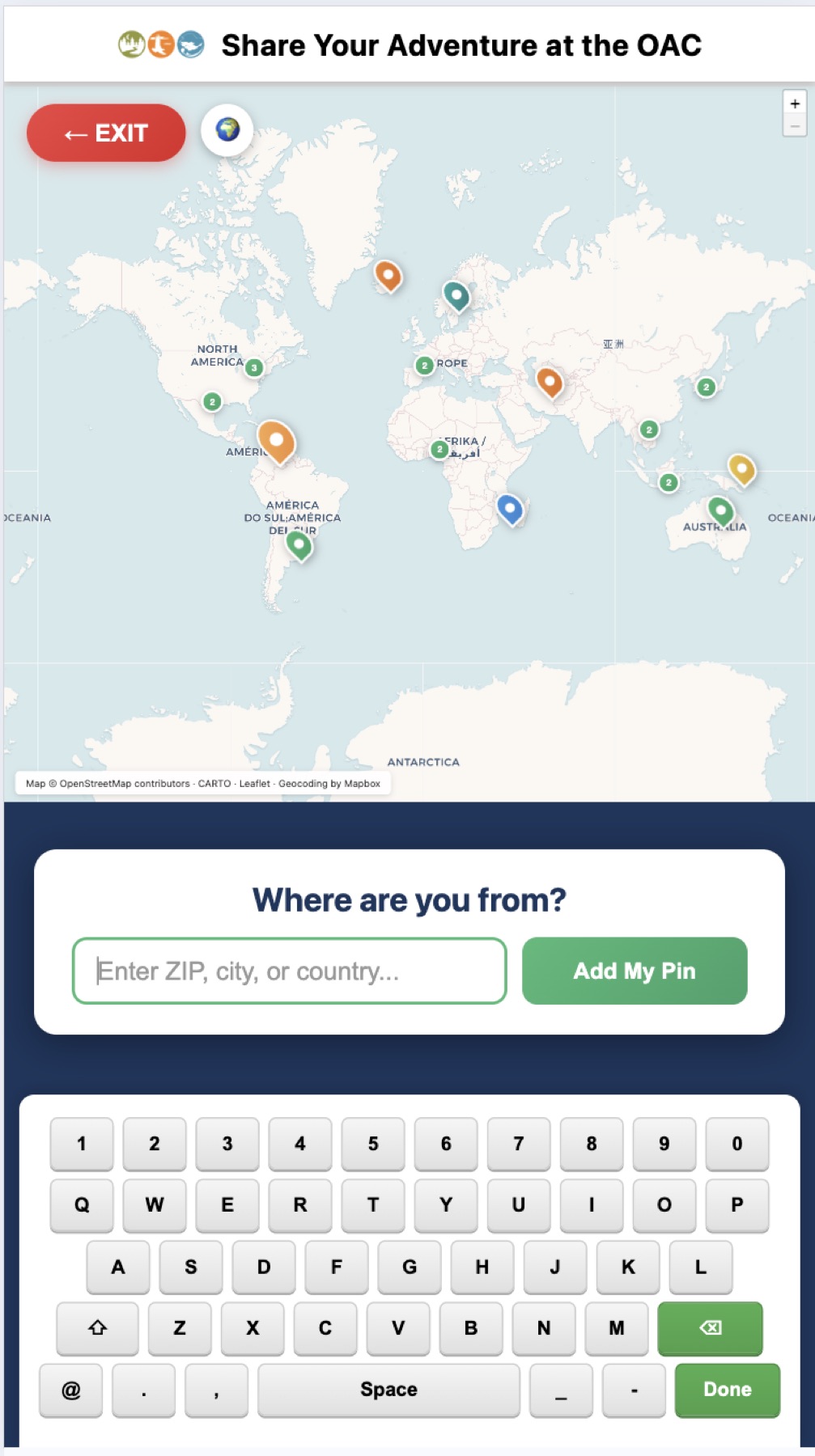
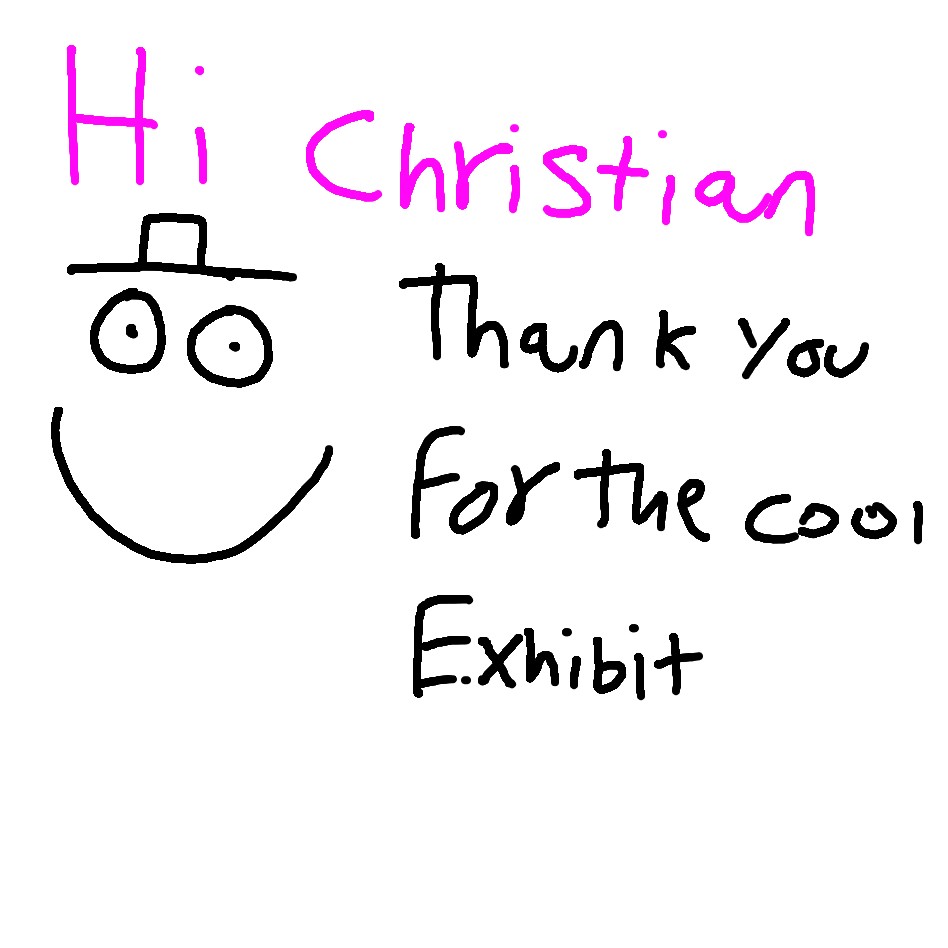
- What's this?
- A guestbook for the museum. Visitors pin where they're from, and kids draw and send in their stories.
- Where do they go?
- An admin panel passes every submission to the museum team.
- Wifi drops?
- It works offline, so a dropped venue network doesn't stop it.
- Made with
- Pin map, drawing canvas, admin panel.
-
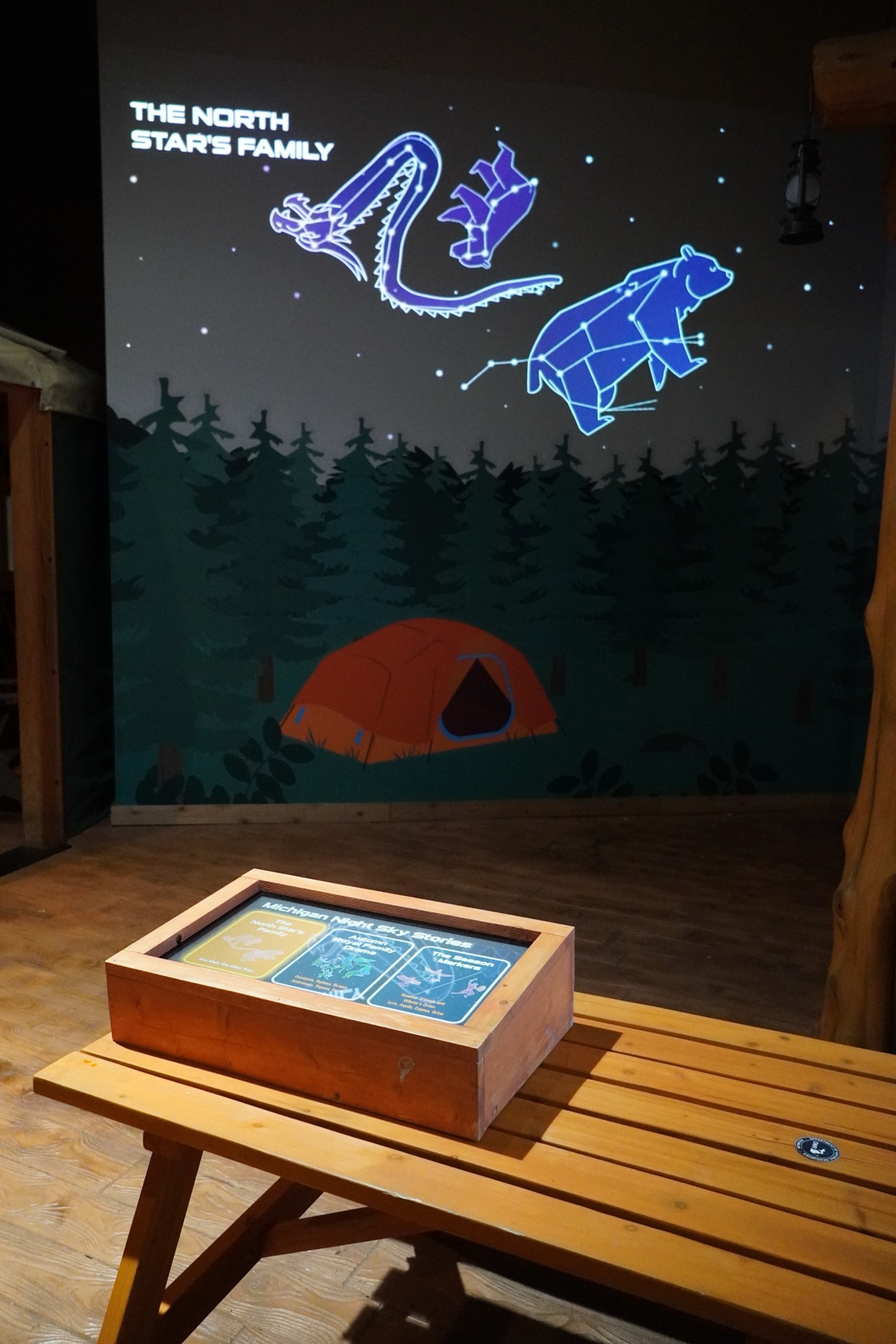
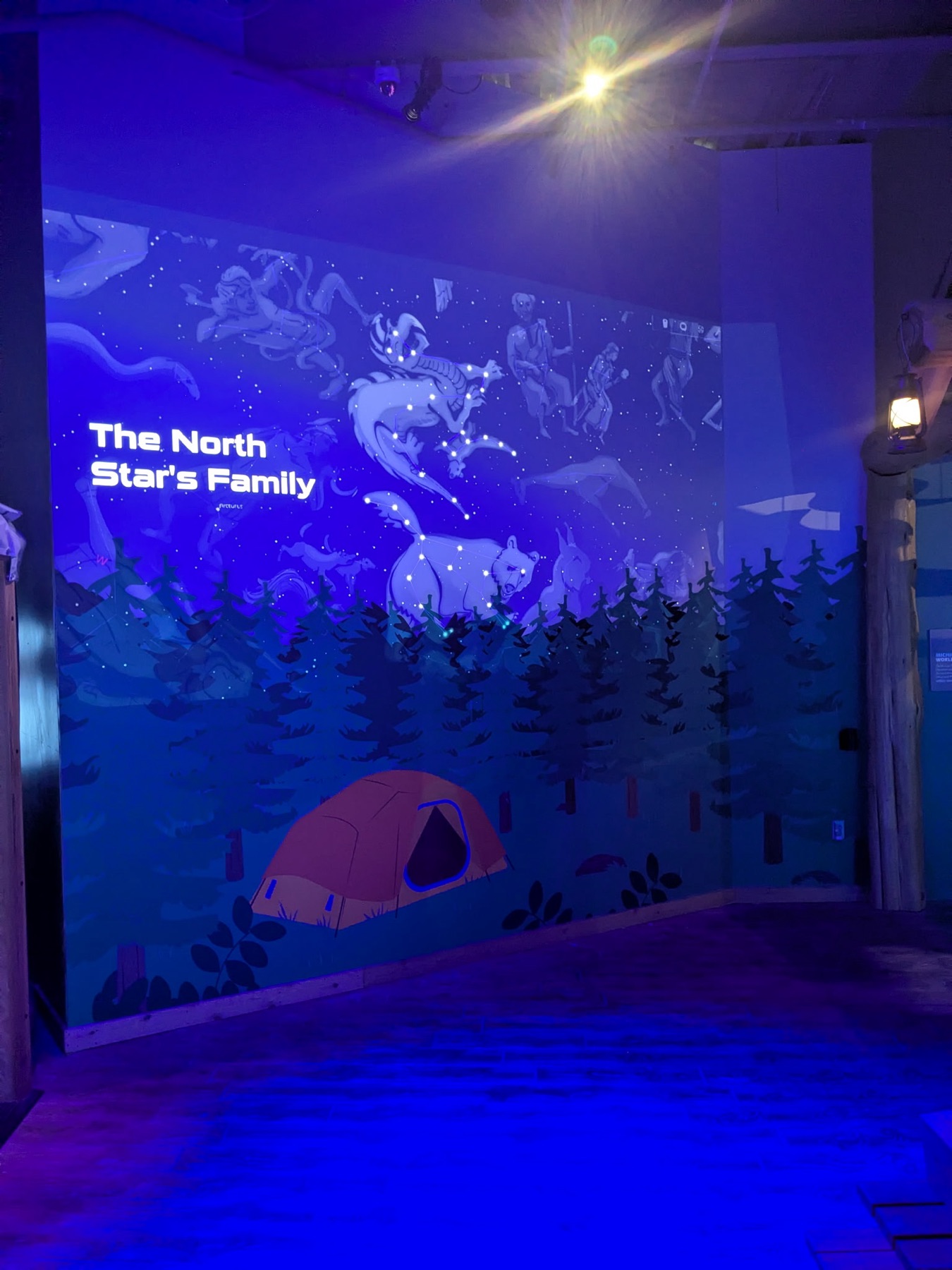
- What's this?
- Different cultures saw different stories in the same stars. The constellations draw themselves in, with those stories layered on top.
- What did I do?
- The illustration, the animation and the large-format print.
- Is it right?
- Every story was checked against the tradition it came from and against the actual sky.
- The point?
- To get people to go outside and look up.
-
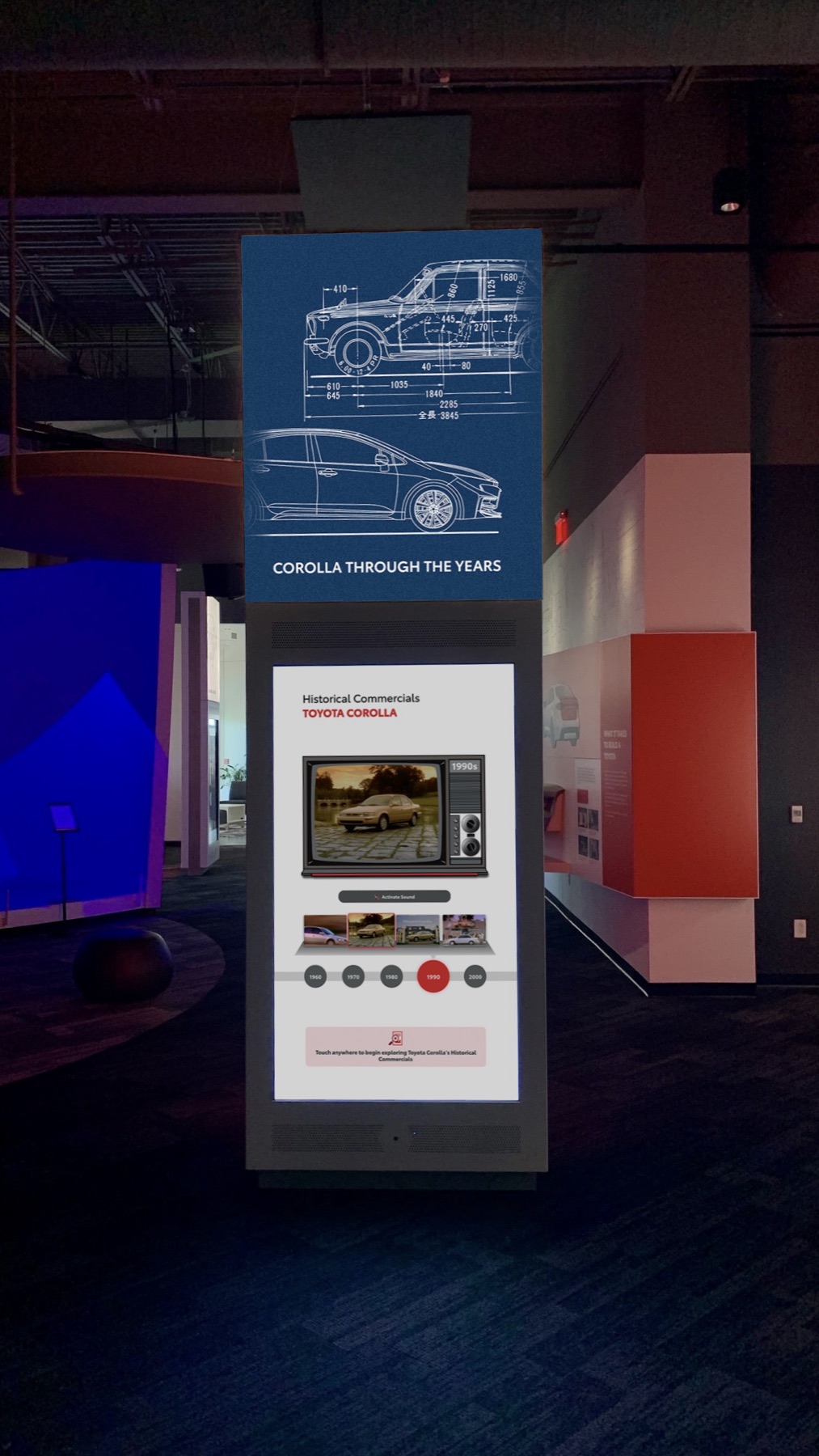
- What's this?
- Decades of Toyota commercials on one 65-inch touchscreen.
- What did I do?
- Cleared and sequenced them with the brand and archive teams into a single timeline.
- Why by era?
- So people can find the ones they grew up with.
-
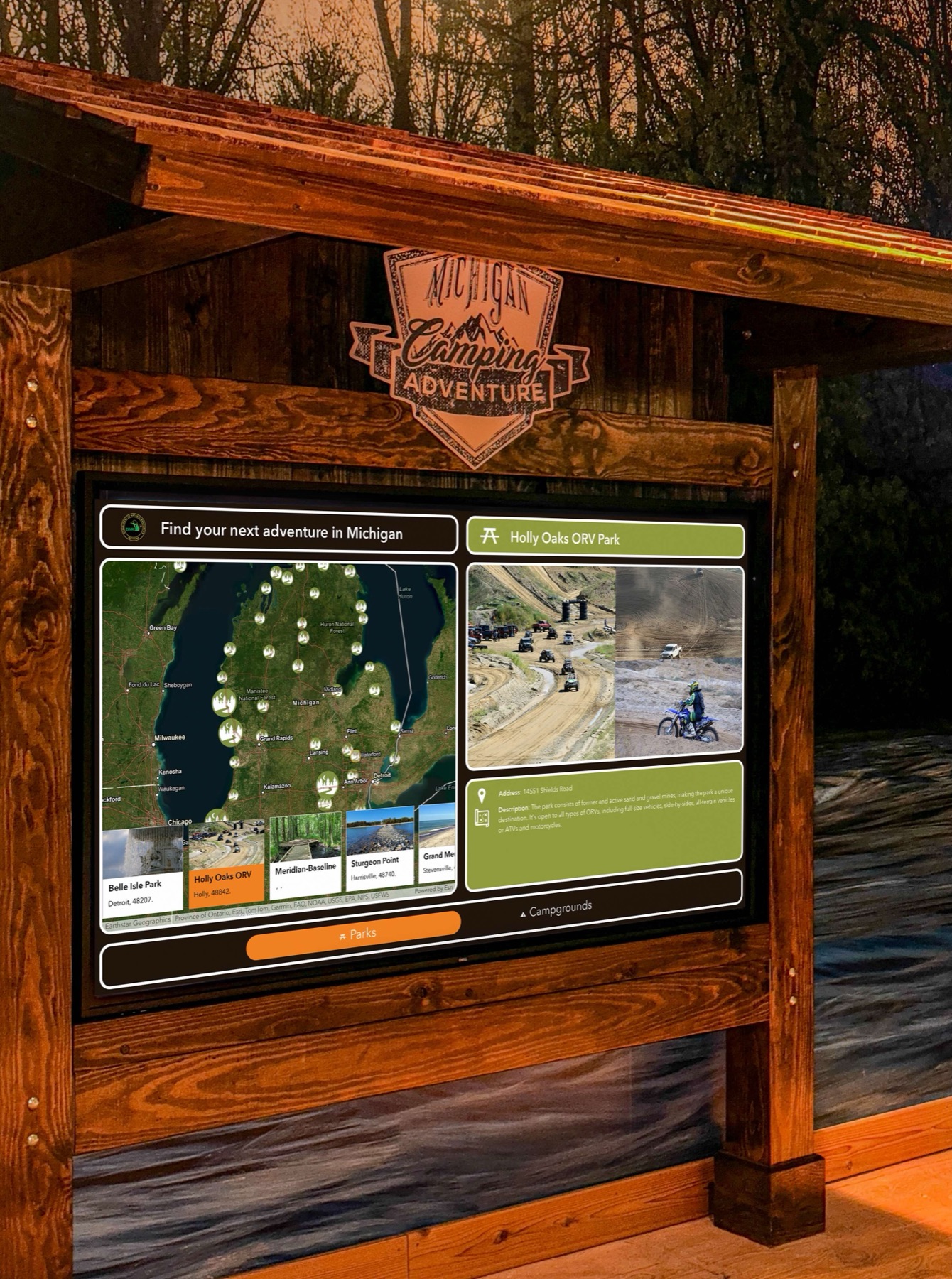
- What's this?
- Families tap through Michigan's outdoor destinations and see what they can do at each one.
- Why ArcGIS?
- The museum's staff can update it themselves, so it stays current without calling a developer.
-
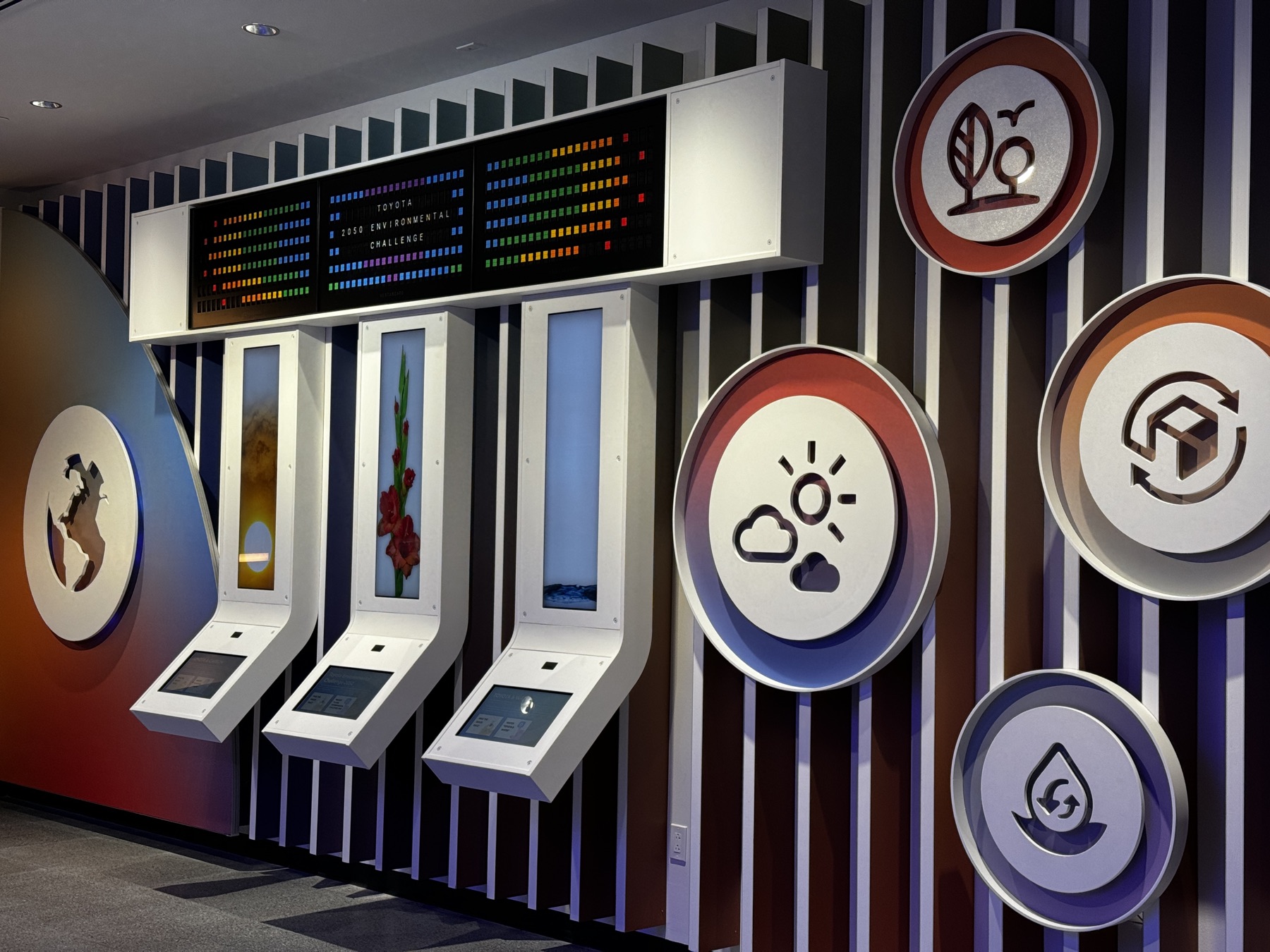
- What's this?
- Live environmental data on Vestaboards, the split-flap displays that click like an old train station board.
- Why not a screen?
- Quiet information, instead of one more screen asking for attention.
-
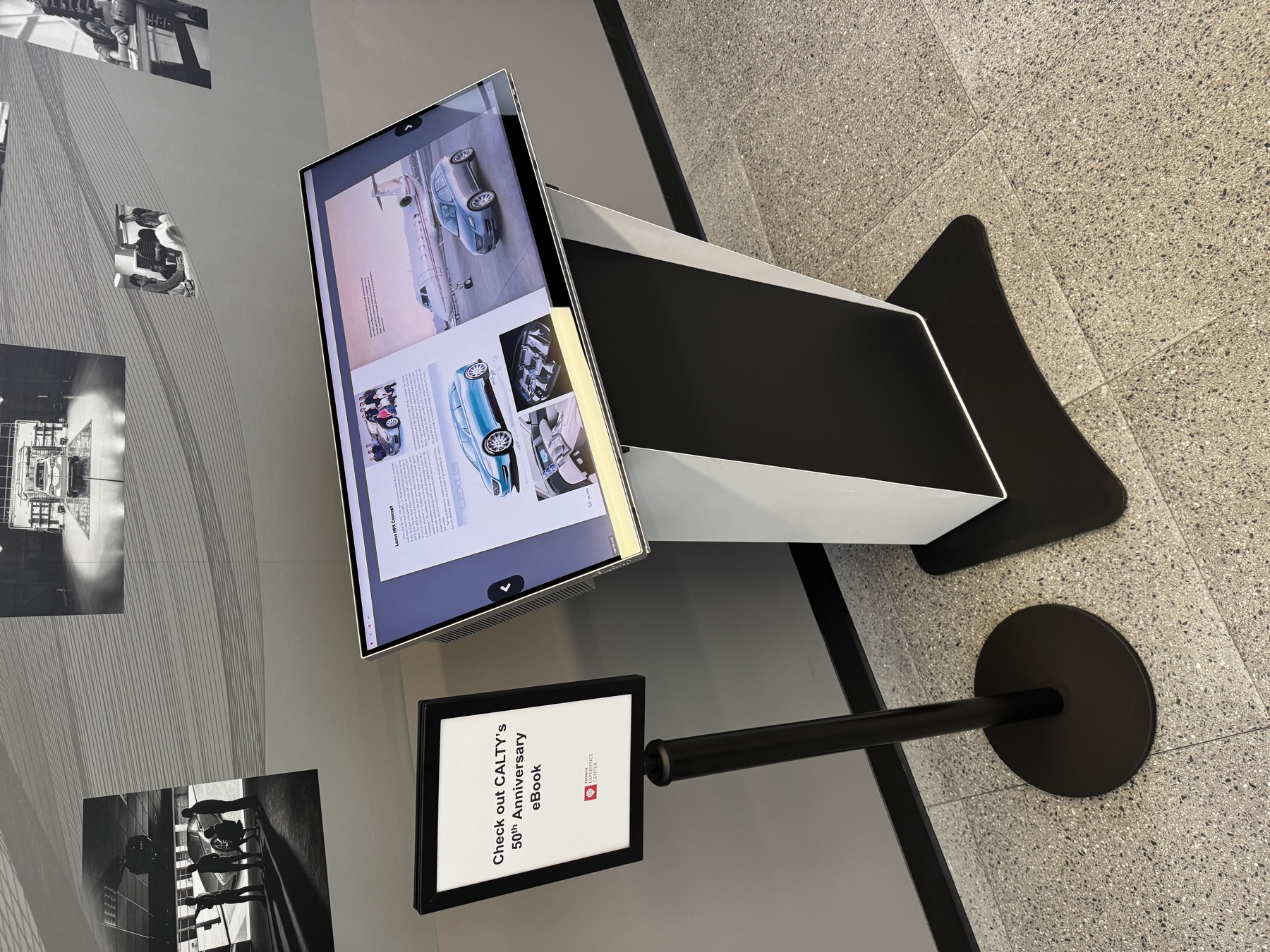
- What's this?
- A digital book about CALTY, Toyota's California design studio.
- Why that screen?
- It was picked to look like the printed CALTY book lying open.
- Internet?
- None needed. It's hosted locally.
-
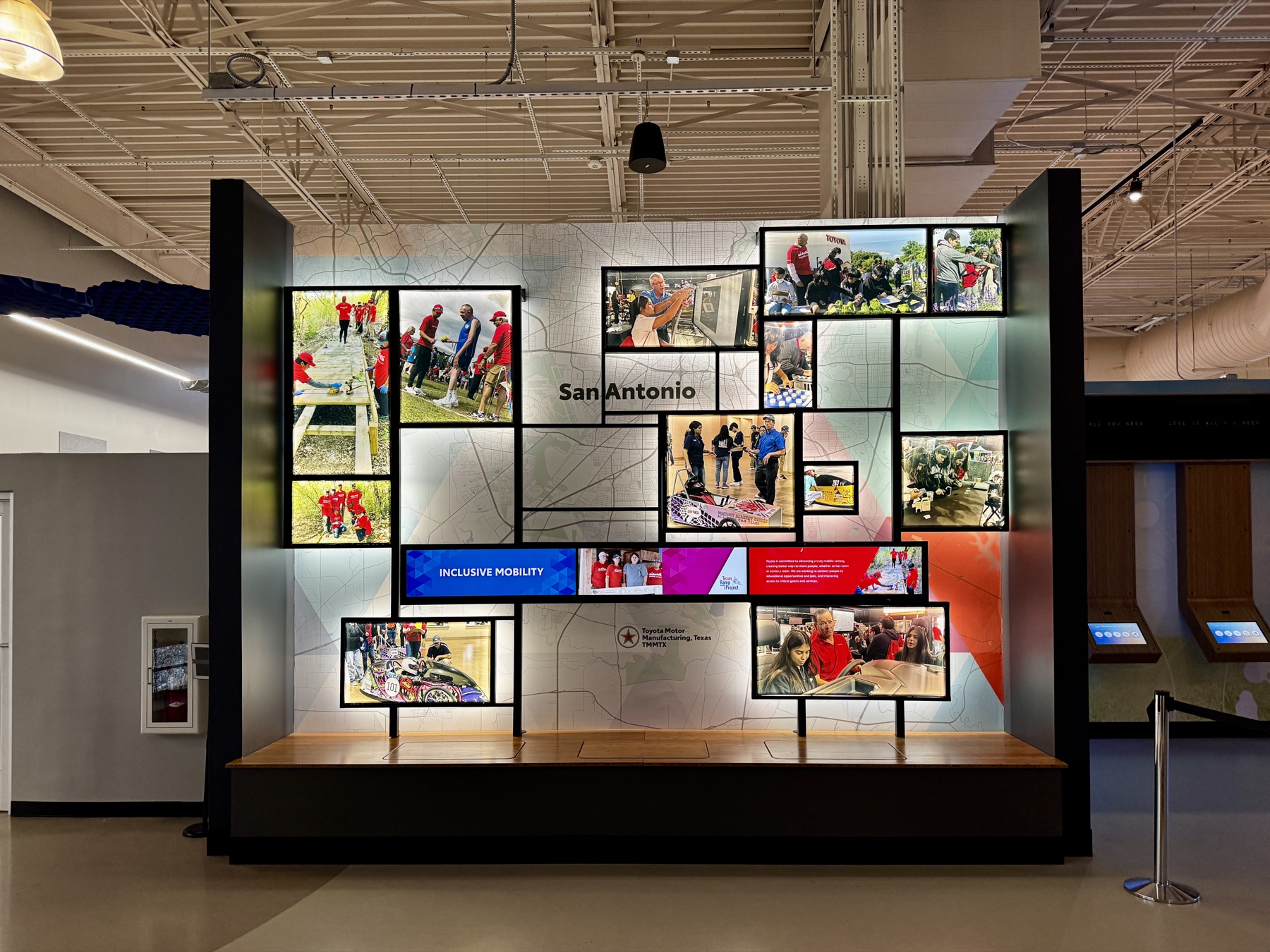
- What's this?
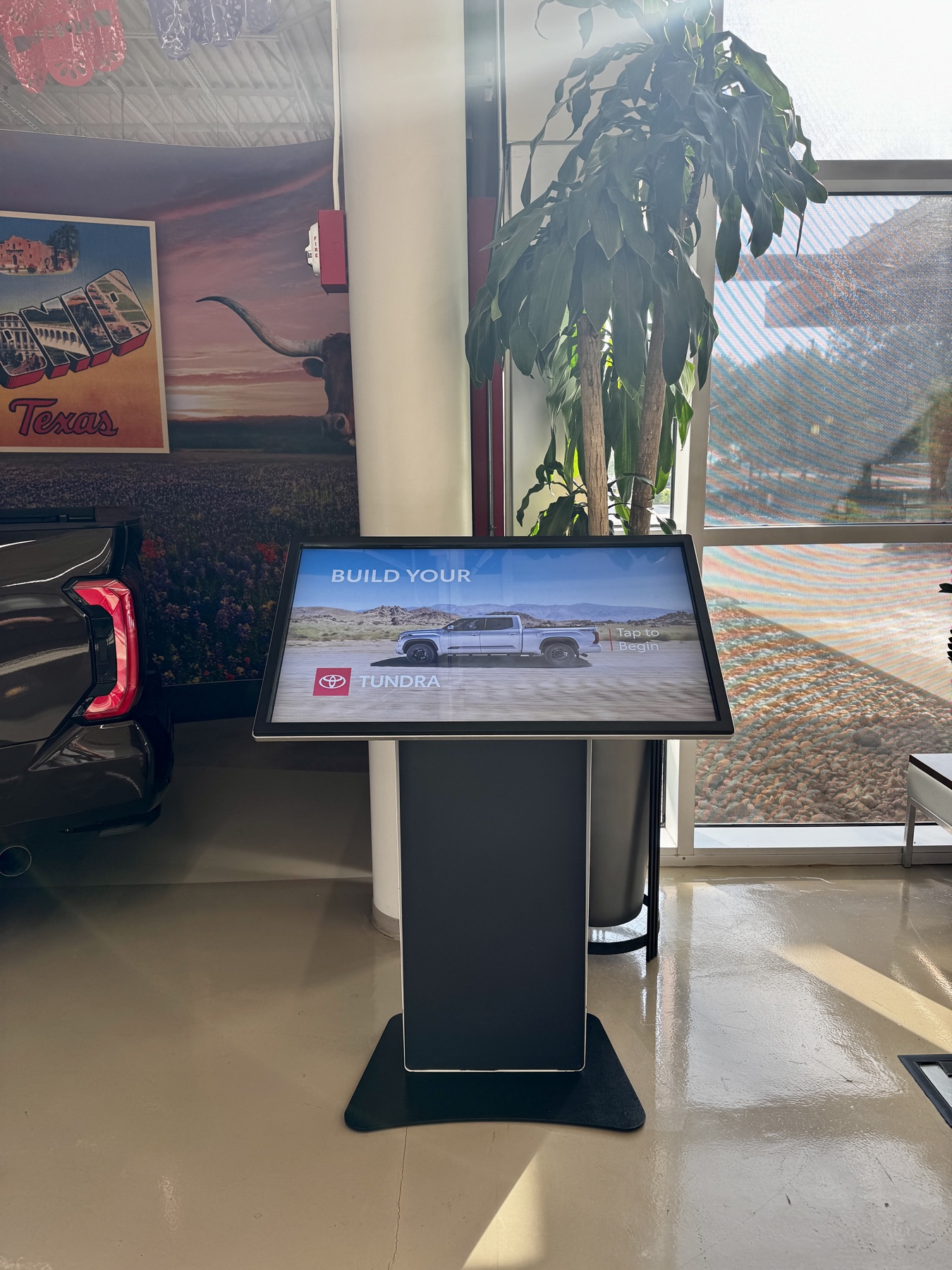
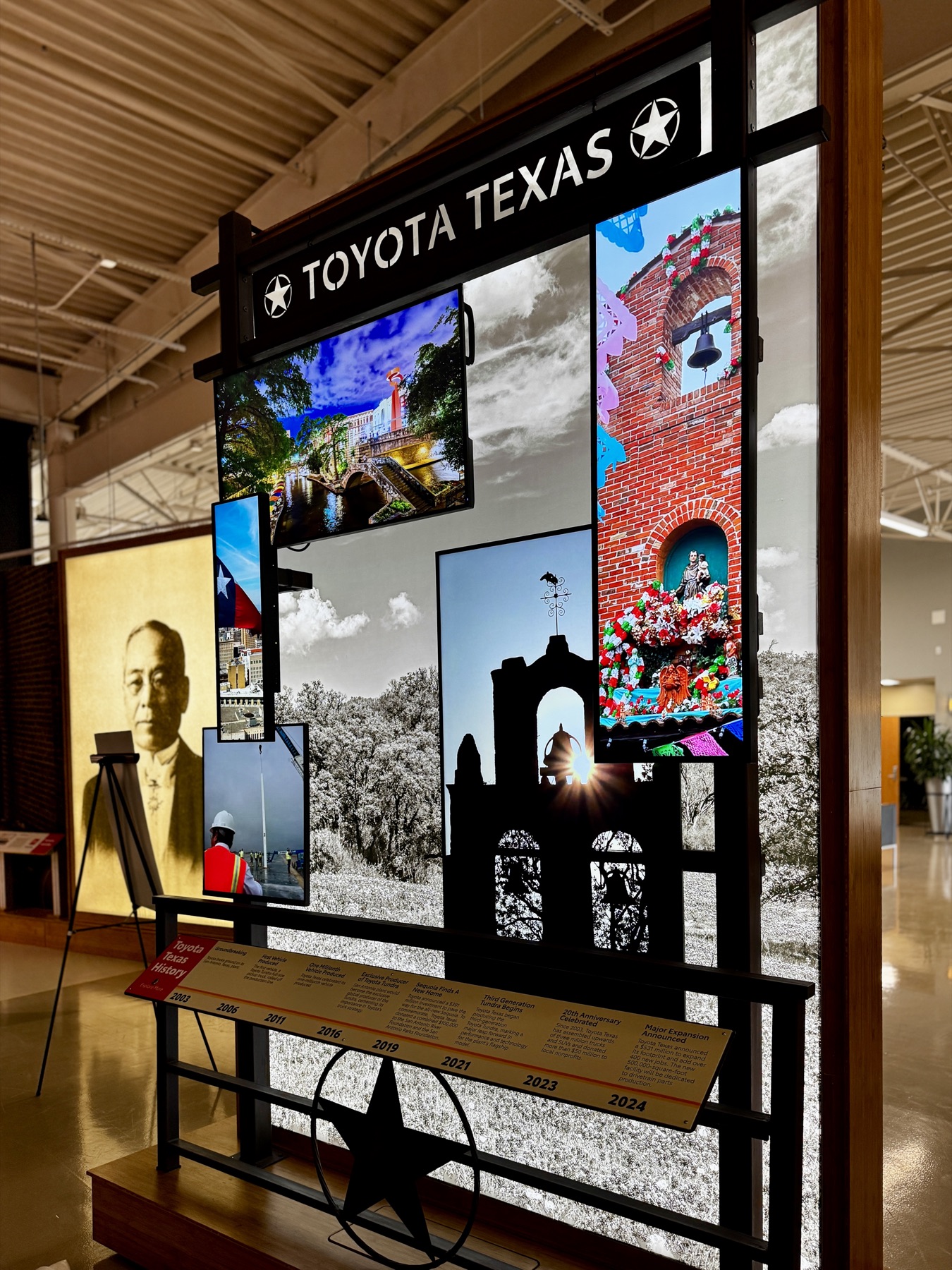
- Touchscreens, wayfinding and community walls for brand homes and museums.
- The rule?
- Run twelve hours a day with nobody watching, come back from a power cut without a keyboard, and make sense to a six-year-old and her grandmother.
-
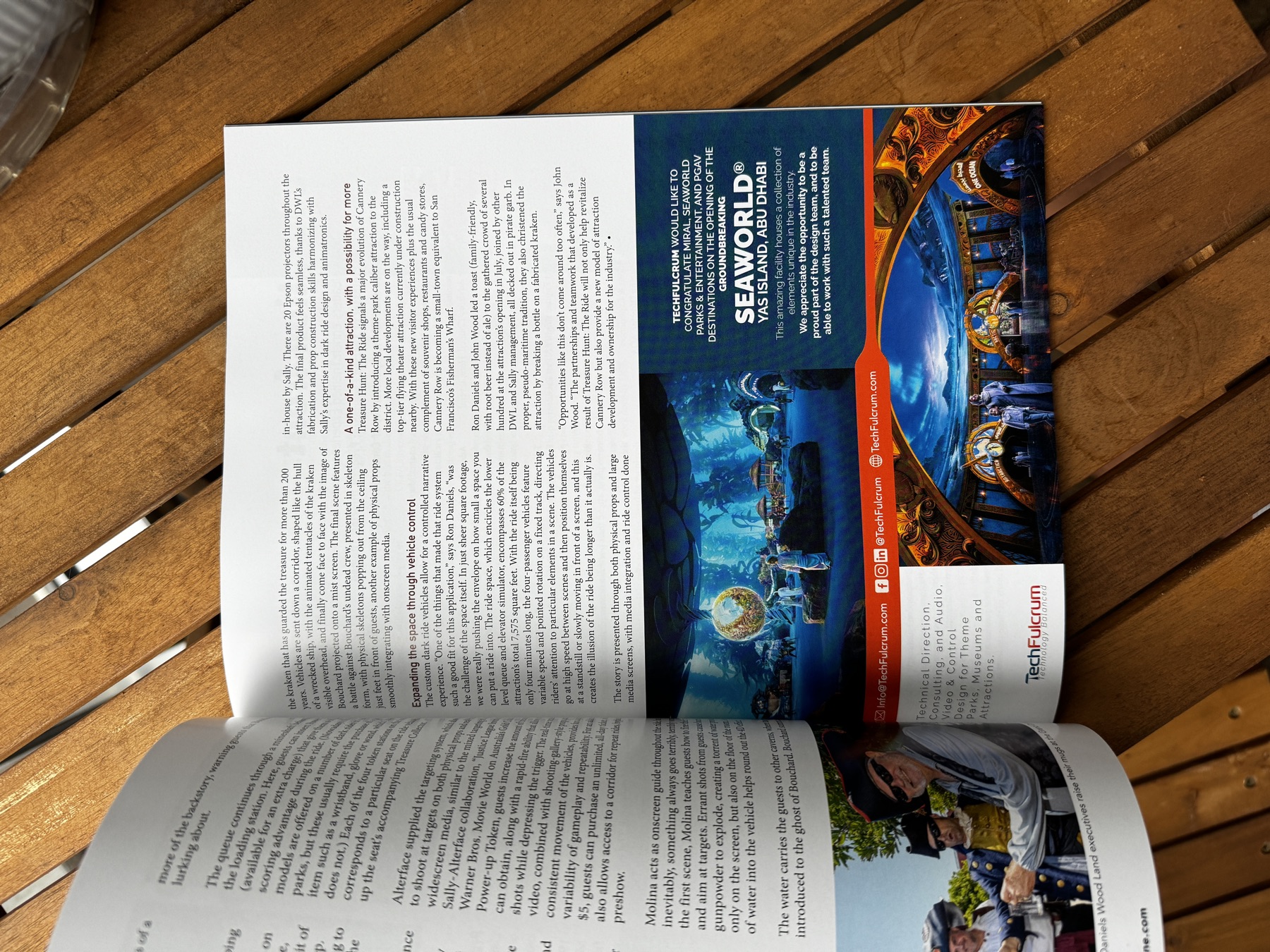
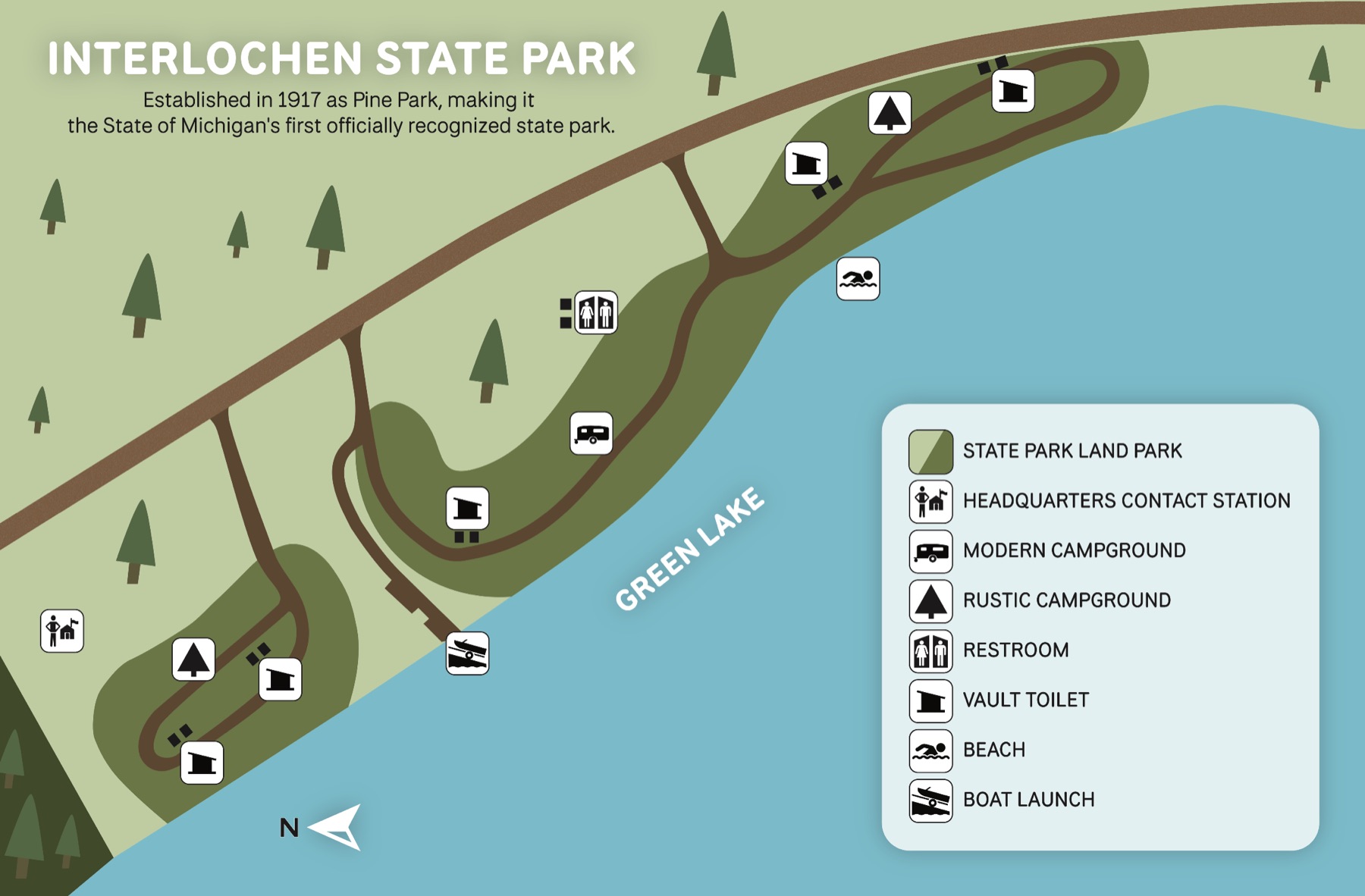
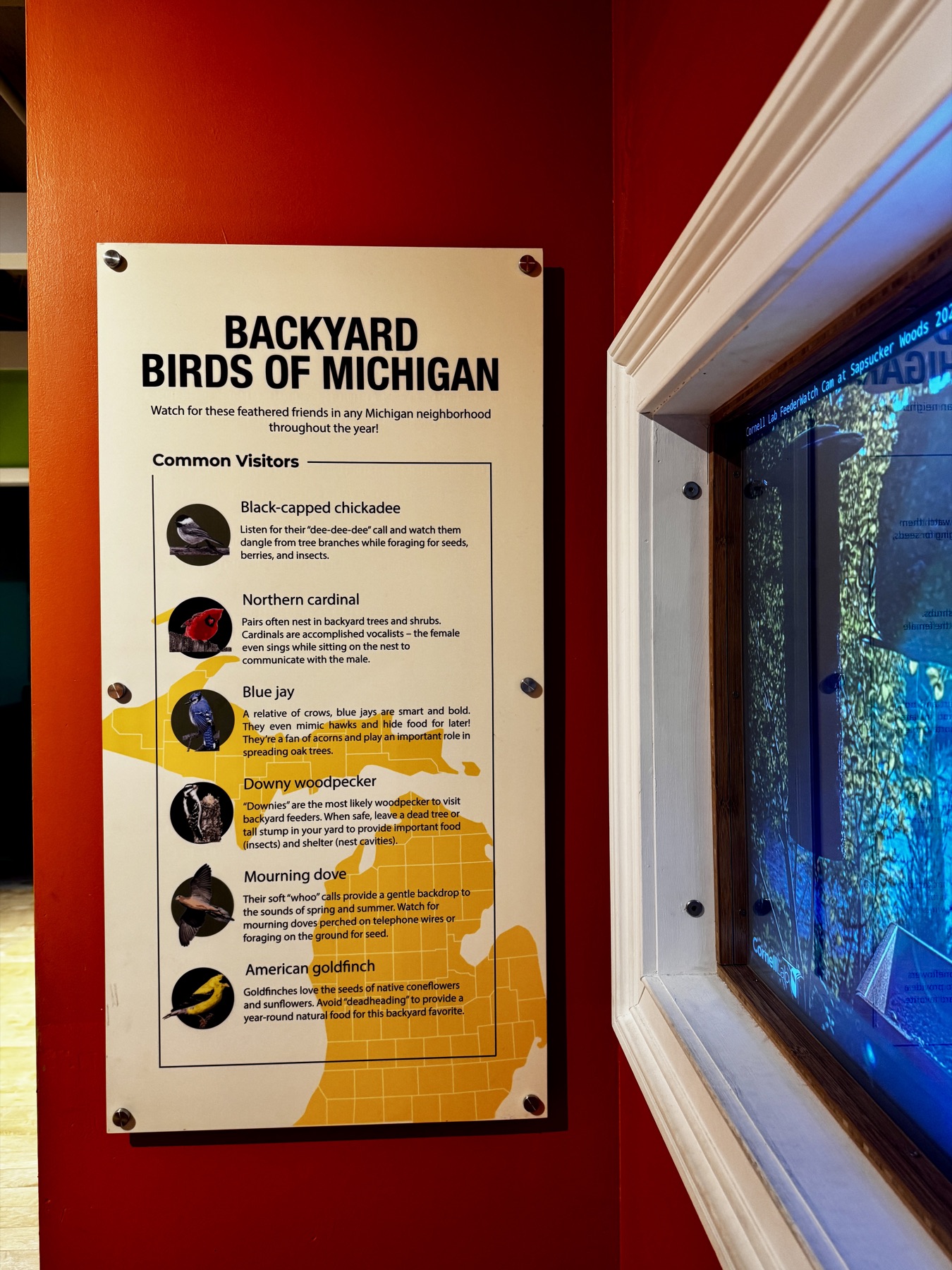
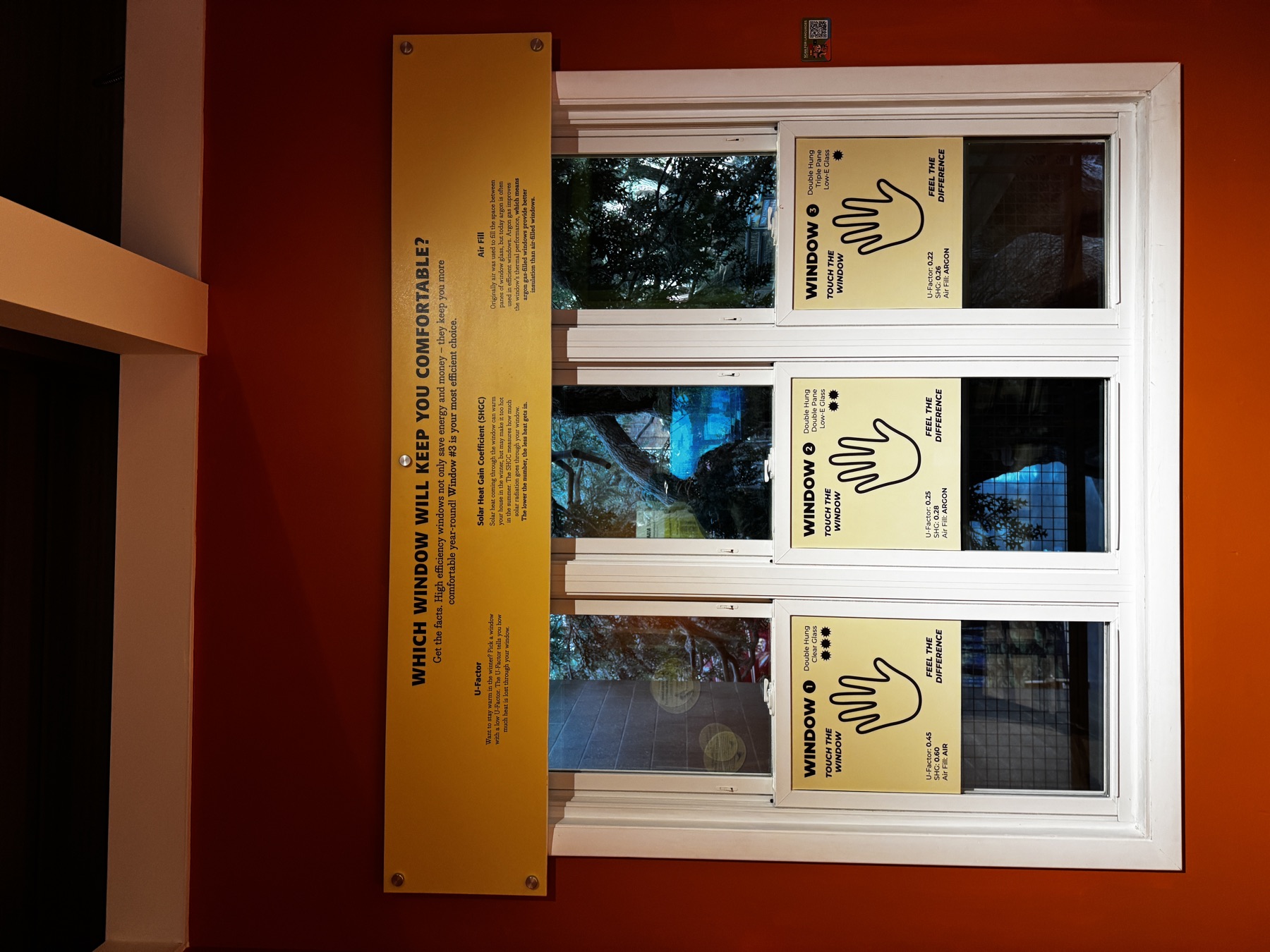
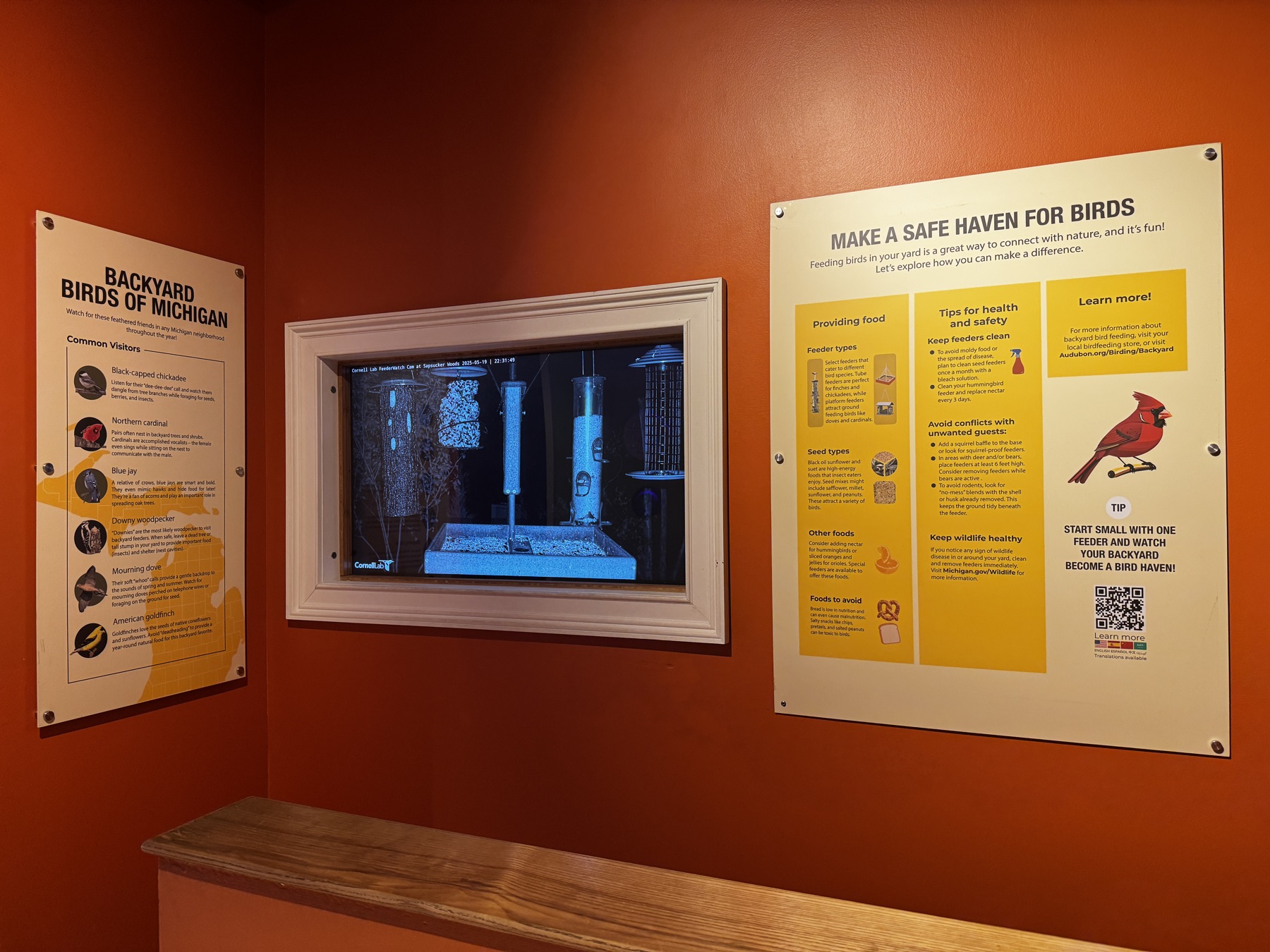
- What's this?
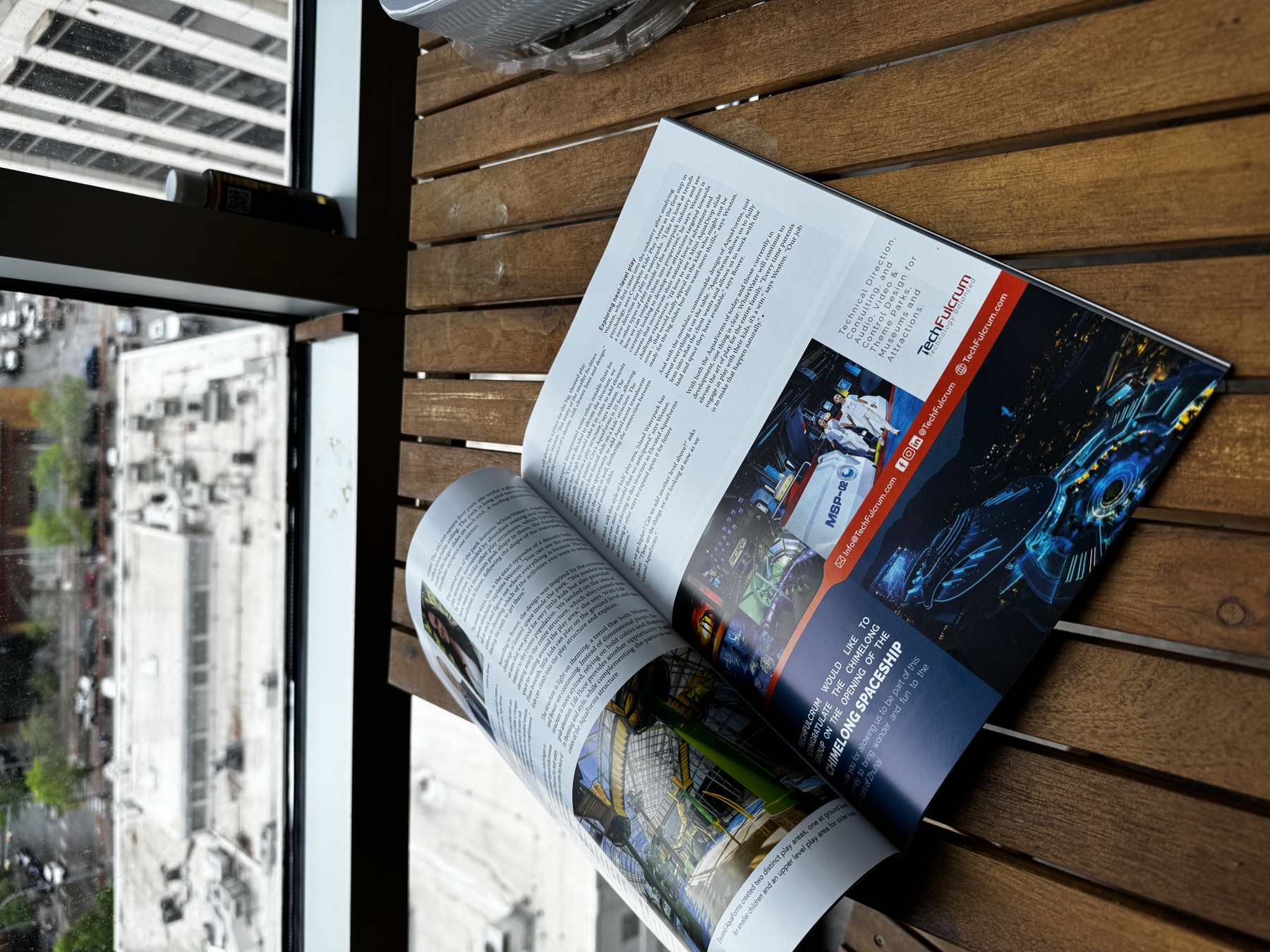
- Publications, illustrated maps, large-format prints and identity work.
- What did I do?
- The illustration, the layout, and the files that go to the printer.
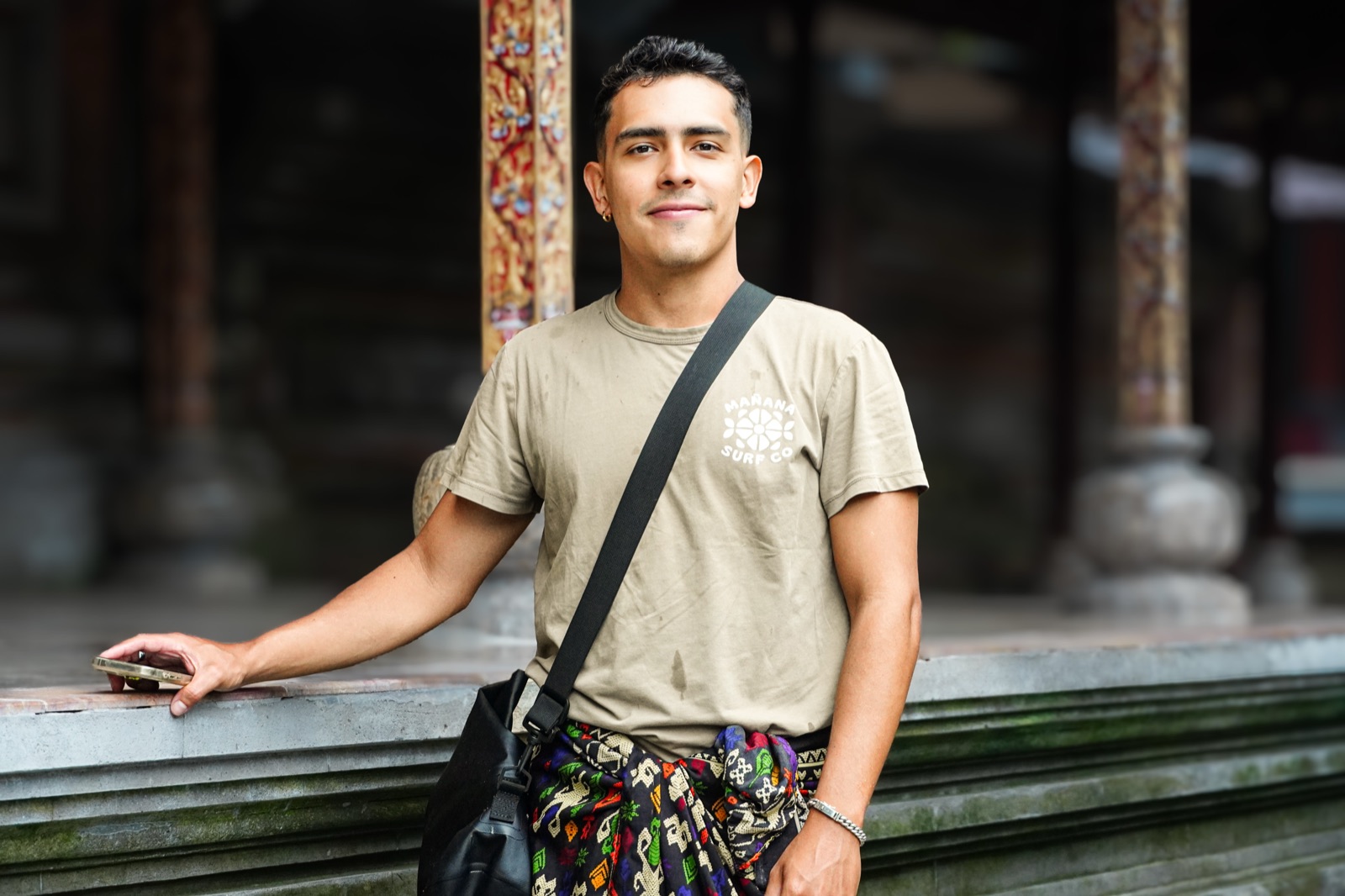
Hi, I'm Christian.
- Who's this?
- A creative technologist in Los Angeles. I design it, build it, and I'm there when the doors open.
- What do I make?
- The software side of exhibits: web applications, games, interactive maps, illustration and video.
- Where is it?
- Five Toyota experience centers in four states, the U.S. Space & Rocket Center in Huntsville, and Detroit's Outdoor Adventure Center. More than 50 installs so far.
- How do I decide?
- An interactive has to earn its floor space. If a printed panel would do the job better, I'll say so.
- Tools
- React, Node.js, Unreal Engine, BrightSign, ArcGIS, AWS, After Effects, Premiere, Illustrator.
How I build experiences
-
01
Find the one true thing
What should someone understand, remember, or care about?
-
02
Make it a feeling
Give people something to see, hear, touch, change, or discover.
-
03
Make it personal
Connect it to something people already understand, feel, or recognize.
-
04
Cut until it's sharp
One hero moment. One ending you keep.
-
05
Then, technology
Choose the tools that make the idea work.
Let's build something that holds up.
christian@chexperiences.comDon't have time for this right now? I gotcha.
 Save my contact +